Locate Us
tooth leaning right tooth leaning left big tooth big tooth
tongue-tie release-kid-dental-care-oral-health
EASING RESTRICTIONS OF YOUR TONGUE (Tongue-Tie Surgery In Singapore)

Tongue-Tie Release in 2026

 Ankyloglossia or rather known as tongue-tie in Singapore, occurs when the band of soft tissue, called the lingual frenulum, at the bottom of your tongue, is short or tight. This restricts your tongue movements.


This is usually a birth condition and can be identified in infants when mothers experience breastfeeding problems. It happens in certain cases in Singapore and is not a rare phenomenon. It may also occur in adults as a result of severe scarring diseases, such as Epidermolysis Bullosa (a rare inherited skin disorders that cause the skin to become very fragile. Any trauma or friction to the skin can cause painful blisters).

What is a Tongue-Tie Release?

what-is-a-tongue-tie-release-baby-cute-oral-health-dental-care

What is a Tongue-Tie Release?

Frenotomy:

In this procedure, the thick and short flap of skin connecting the tongue to the floor of the mouth is cut.


A tongue-tie release is generally a simple procedure, where the tongue is lifted and the band of tissue attaching your tongue to the floor of the mouth is trimmed. This allows your tongue to move freely and engage in its full range of movements.


It is usually performed on infants as it is done with ease at this stage as compared to an older child or adult.


Benefits of Tongue Tie Surgery

  • Enhanced speech.
    Some individuals with tongue-tie may have imprecise articulation, especially at speed. Having tongue-tie release surgery may possibly enhance the speech speed and enunciation of certain words.
  • Enhanced dental health.

    Cavities ('dental caries') can occur due to food debris not being removed by the tongue’s action of sweeping the teeth and spreading saliva. Having the surgery will help enhance the tongue flexibility.

  • Enhanced eating habits and digestion system.
    Some children with tongue-tie are messy eaters due to a restricted ability to tidy up inside and outside of their mouths while they are having a meal. Some are unable to circle their lips with their tongues in order to fully lick their lips. In extreme cases poor oral hygiene can lead to digestive complaints.
  • Enhanced appearance.

    The tongue can be unduly obvious or unusual looking in some individuals, particularly when they are close up, or appear on video, film or TV.
  • Enhanced self-esteem.

    It has been noted clinically that occasionally an older child or adult will be self-conscious, embarrassed or resentful about their tongue tie.

Do I Need a Tongue-Tie Release?

A tongue-tie release in Singapore is commonly done for babies to prevent stunted growth and tongue restriction. Babies with tongue-tie show signs and symptoms such as:
  • The mother having nipple pains during and after breastfeeding;
  • The mother having flattened-looking nipples after breastfeeding;
  • The mother having a white compression mark on the nipple after breastfeeding;
  • The baby failing to gain weight;
  • The baby having difficulty feeding and swallowing (during breastfeeding), which can cause inadequate nutrition.

Do I Need a Tongue-Tie Release?

do-i-need-a-tongue-tie-release-mother-baby-kiss-dental-care-oral-health

Tongue-Tie Classification: Kotlow Class I to IV

Tongue ties vary widely in how they look and how they are built. Some are obvious the moment the tongue lifts. Others are difficult to spot in a straightforward visual check.

The system most often used to describe both tongue ties and lip ties is the Kotlow classification. For the tongue, it grades ankyloglossia by the amount of free tongue between the attachment point of the lingual frenulum and the tip of the tongue.


  • Class I, mild tongue tie: 12 to 16 mm of free tongue. The anatomical restriction is relatively mild. Some patients function normally despite a visible tongue tie, while others show functional difficulty.

  • Class II, moderate tongue tie: 8 to 11 mm of free tongue. The frenulum sits further forward and can restrict elevation and movement more noticeably.

  • Class III, severe tongue tie: 3 to 7 mm of free tongue. The attachment is more anterior and the anatomical restriction is significant. Lifting and sticking out the tongue may be visibly limited.

  • Class IV, complete tongue tie: less than 3 mm of free tongue. The frenulum attaches very close to the tongue tip. These are usually obvious on sight and often produce the heart-shaped notch seen when the patient tries to lift or protrude the tongue.

The grade describes anatomy. It does not, on its own, describe functional impairment. That is why our assessment also covers tongue elevation, extension, side-to-side movement, cupping, suction and, in babies, feeding.

Tongue-Tie Classification: Kotlow Class I to IV

tongue-tie release-kid-dental-care-oral-health-eating-kid-happy-playful

Lip Tie: How the Upper Labial Frenulum Is Classified

The Kotlow system also grades the maxillary labial frenulum, commonly called an upper lip tie, on its own Class I to IV scale. Unlike the tongue-tie version, which measures free tongue, the lip-tie classification describes where the frenulum attaches to the gum and palate.


Class I, minimal attachment: the frenulum attaches high in the mucolabial fold, where the inside of the upper lip meets the gum. A relatively minor attachment.


Class II, gingival attachment: the frenulum inserts into the attached gingiva of the upper jaw. More prominent than Class I, but it stops short of the papilla between the upper central incisors.


Class III, papillary attachment: the frenulum reaches the interdental papilla between the upper central incisors. Lifting the lip may reveal a broad or prominent band that puts tension on the gum tissue.


Class IV, papillary-palatal attachment: the frenulum passes through the papilla and extends towards or onto the front of the palate. This is the most extensive attachment in the system, and the one parents usually encounter online as a "Class 4 lip tie".

Does a Class III or Class IV Lip Tie Need Treatment?

Not automatically, and this matters because the labels sound alarming to parents.


The Kotlow grade tells us where the upper labial frenulum attaches. It does not establish that the attachment is causing a breastfeeding difficulty or any other functional problem. Upper lip frenula also vary a great deal in normal babies and young children.


During a lip-tie assessment our dentists look past the grade and consider:


  • Mobility and flexibility of the upper lip

  • Whether the lip can move appropriately during feeding

  • Feeding symptoms in the baby

  • Symptoms reported by the mother

  • The rest of the oral anatomy

  • Whether a tongue restriction is present alongside it

  • Findings from a feeding assessment


Where breastfeeding is the main concern, an assessment by an International Board Certified Lactation Consultant (IBCLC) is often the most useful piece of the picture.


We do not release a lip tie because a frenulum has been labelled Class III or Class IV. The decision rests on the clinical and functional assessment as a whole.

What Is a Posterior Tongue Tie?

A posterior tongue tie is far less obvious than a classic anterior one.


With an anterior tongue tie, the restricting band runs towards the tip of the tongue and can usually be seen straight away. With a posterior restriction, the tissue doing the restricting sits further back and deeper beneath the tongue, so the tongue can look close to normal when someone simply peers into the baby's mouth.


This is exactly why a tongue-tie assessment has to be more than a visual inspection. Our dentists assess the tongue while it is properly elevated, looking at range of movement and at the anatomy of the tissue underneath. Palpation helps establish how much restriction there is and where it sits.


Where a posterior restriction is suspected, the questions that matter are functional ones:


  • Can the tongue elevate far enough?

  • Can it stay in contact with the palate?

  • Is there side-to-side movement?

  • Can the baby cup the tongue?

  • Can the baby create and hold suction?

  • Does the baby keep losing suction or clicking during a feed?

  • Can the baby hold an effective latch?

  • Is milk transfer adequate?


The terminology and diagnosis of posterior tongue tie are still debated among clinicians, and definitions are not uniform. For that reason we do not recommend a release on the strength of the label alone. The diagnosis has to hold up clinically.

Anterior vs Posterior Tongue Tie

An anterior tongue tie is generally the more visible of the two. The frenulum runs towards the tip of the tongue and visibly limits how far the tongue can be pushed out or lifted.


A posterior restriction often looks unremarkable, because the tissue responsible sits further underneath.


That difference carries a practical point for parents: how dramatic a tongue tie looks is not a reliable guide to how much difficulty it is causing. A prominent frenulum can coexist with good function, while a restriction that is barely visible can warrant a closer look when the feeding symptoms are significant.

Risks of Tongue Tie

In severe cases of tongue-tie, your tongue is not able to lift to touch the roof of your mouth. This can have many negative consequences, such as:
  • An inability to sweep food particles around your mouth;
  • Inaccurate speech and pronunciation;
  • The tip of the tongue involuntarily protruding out of your mouth;
  • Misalignment of your teeth from the lack of guidance input from your tongue, which guide the growth and positioning of your front teeth to grow; 
  • Having difficulty brushing and flossing your teeth and gums, which eventually lead to tooth decay and gum disease.


A tongue-tie release can help to alleviate all of these problems.

Risks of Tongue Tie

tongue tie

How We Assess Tongue Tie and Lip Tie

Classification is one input, not the decision. Our assessment looks at three things together.


  • Anatomy. Where does the frenulum attach? For the tongue we may record the restriction using the Kotlow tongue-tie grades. For the upper lip we describe the attachment using the Kotlow Class I to IV lip-tie system.

  • Function. Can the tongue lift, extend, move sideways and take part normally in oral function? In an infant, can the baby create and hold suction and use the tongue during a feed? For the lip, is mobility meaningfully restricted?

  • Symptoms. What difficulty is actually happening? For a breastfeeding baby that can include latch problems, loss of suction, clicking, long feeds, poor milk transfer, or nipple pain and trauma in the mother.

The guiding principle stays the same throughout: we do not treat a classification number. We treat a clinically significant functional restriction, where anatomy, examination and symptoms all point the same way.


Tongue-tie and lip-tie release can be carried out under local anaesthetic, IV sedation or general anaesthesia, depending on the patient and the extent of the release.

tooth leaning right tooth leaning left big tooth big tooth
FEATURED TODAY
Cost of Tongue-Tie Release Surgery

Tongue-Tie Release Surgery Cost In Singapore

The information provided below is of a general nature solely as you would need to be examined by our dentists in order to confirm the best treatment option for you.


The treatment cost for Tongue tie release surgery in Singapore ranges from S$1000-S$3000. This is non-inclusive of the consultation fee and other surcharges that may be incurred in the process of the surgery (E.g Anaesthesia). 


If you are a Singaporean or a permanent resident of Singapore, Medisave may be utilised to partially cover the applicable fees for tongue tie surgery. You can claim up to Medisave (please contact us for current limits) via Medisave for the surgery.


For details on Medisave coverage, please call us for information.

What Does the Procedure Involve?

Stage 1: Consultation

  • Evaluating Habits & Behavioural Patterns
Your dentist will ask you a series of questions regarding yours or your infant’s food consumption, speech, etc., and examine the mouth to determine the severity of the tongue-tie.

Stage 3: Post-Operative Care

After the procedure, your dentist will give you instructions on how to look after your mouth.

Stage 2: Tongue-Tie Release Procedure

  • The tongue-tie release is quick and will take less than 15 seconds and the results are immediate.
  • For infants, no anaesthetic will be given. They might experience slight discomfort during the procedure but they tend to recover speedily within minutes, often with no recollection. We recommend for your infant to immediately be breastfed after if possible, to help them revert their usual selves faster and efficiently. 
  • For older children or adults, a local anaesthetic may be needed before the procedure. Recovery is also generally quick.

Tongue Tie Release Surgery FAQs

Is tongue tie release surgery painful?

The entire procedure takes less than 15 seconds and does not require anaesthesia. The frenulum is very thin and has few nerves, meaning there is very little pain associated with the procedure. Babies can breastfeed immediately after the procedure, and mothers often notice enhancement with the first feed.

At what age should a tongue tie be cut?

Newborns can undergo tongue tie release surgery.

Can tongue tie release surgery go wrong?

When done professionally by a dentist, it doesn't cause any problems at all. 

What happens after tongue tie release in adults?

You will have some swelling of the floor of the mouth/under the tongue. Keep dampened gauze in for 2 hours with good pressure. Then remove gauze and check surgical area for bleeding. If bleeding persists, place fresh dampened gauze over the area with good pressure for 1 hour.

Can tongue tie affect sleep?

If tongue-ties remain untreated, they can lead to structural and functional changes in the facial-respiratory complex and can impact sleep throughout the lifespan. Tongue-ties and low tongue resting postures often lead to or exacerbate mouth breathing.

How long will my baby be sore after tongue tie release surgery?

For most babies, the first 48-72 hours are the hardest after a tongue tie release procedure. However, after day 3 the discomfort subsides considerably and breastfeeding will be easier.

Is a Class 4 lip tie more serious than a Class 2?

The class describes how far the frenulum attaches, not how much trouble it causes. A Class IV attachment can exist with normal feeding, and a lower-grade attachment can sit alongside significant symptoms. The assessment decides, not the grade.

Can a tongue tie be missed on a normal check?

Yes. A posterior tongue tie can look unremarkable when the mouth is simply opened and viewed. It is found by lifting the tongue, checking range of movement and palpating the tissue underneath.

My baby has been told they have a posterior tongue tie. Does that mean surgery?

Not by itself. The term is used inconsistently between clinicians, so we reassess function and symptoms before recommending anything.

Does a tongue tie affect adults?

It can. Adults report difficulty sweeping food around the mouth, limited tongue elevation, and articulation that slips at speed. Release in adults is done under local anaesthetic or sedation.

Our Team of Dentists Behind Tongue Tie Surgery

View More

At Nuffield Dental clinic, your dental needs are cared for by our dedicated team of dentists.

Dr Samintharaj Kumar S/O Samy Raja profile at Nuffield Dental Singapore

Dr Samintharaj Kumar S/O Samy Raja

The Nuffield Dental Clinic Network In Singapore

Nuffield Dental Seletar

Nuffield Dental Seletar
Greenwich V
1 Seletar Road #01-07/08
Singapore 807011

Nuffield Dental Kovan

Nuffield Dental Kovan
Simon Plaza
2 Kovan Road #01-03
Singapore 548008

Nuffield Dental Serangoon Gardens

Nuffield Dental Serangoon Gardens
Serangoon Garden Estate
57 Serangoon Garden Way
Singapore 555953

Nuffield Dental Siglap

Nuffield Dental Siglap
The Domain
914 East Coast Road #01-03
Singapore 459108

Nuffield Dental Bedok

Nuffield Dental Bedok
East Village Mall
430 Upper Changi Road #01-64
Singapore 487048

Nuffield Dental Holland Village

Nuffield Dental Holland Village
7 Holland Village Way #03-16
Singapore 275748

Nuffield Dental Jurong East

Nuffield Dental Westgate
Westgate
3 Gateway Dr #04-32
Singapore 608532

Nuffield Dental Marina One

Nuffield Dental Marina One
The Heart, Marina One
5 Straits View #B2-58
Singapore 018935

Nuffield Dental Jewel

Nuffield Dental Jewel
Wheelock Place
501 Orchard Road #05-01
Singapore 238880

Nuffield Dental Raffles Place

Nuffield Dental Raffles Place
One Raffles Place
1 Raffles Place #05-19
Singapore 048616

medical-appointment 1

Contact us for information

Fill out the form for any request or questions you have and we will contact you within one working day..


featured-logos-1
background image

Why Choose Nuffield Dental?

Nuffield Dental is a one-stop, multi-disciplinary dental care centre in Singapore. At Nuffield, we put you first. We believe in providing personalised service for each patient.

Dental care

Nuffield Dental is a one-stop, multi-disciplinary dental care centre. Here at Nuffield Dental, we pride ourselves of our personalised oral care for each and every one of our patients. We need to make sure you get all the help you need to make your dental procedures comfortable, accessible and seamless.

Tongue Scraping-01-01

Our dentists have a special interest inoral maxillofacial surgery and are accredited dental providers who have been helping patients achieve confident smiles.

Tongue-Tie Release Cost in Nuffield?

Please call one of our Nuffield Dental clinics in Singapore for pricing details.

Book Now

Articles

The newest and best lifestyle articles selected by our editorial team.

  • 20 Jul 2026
  • 2 mins read
Nuffield Holdings Private Limited Recognised as a Singapore Company of Good

Nuffield Holdings Private Limited is pleased to announce that it has been conferred the Singapore Company of Good 3 Hearts Recognition by the...
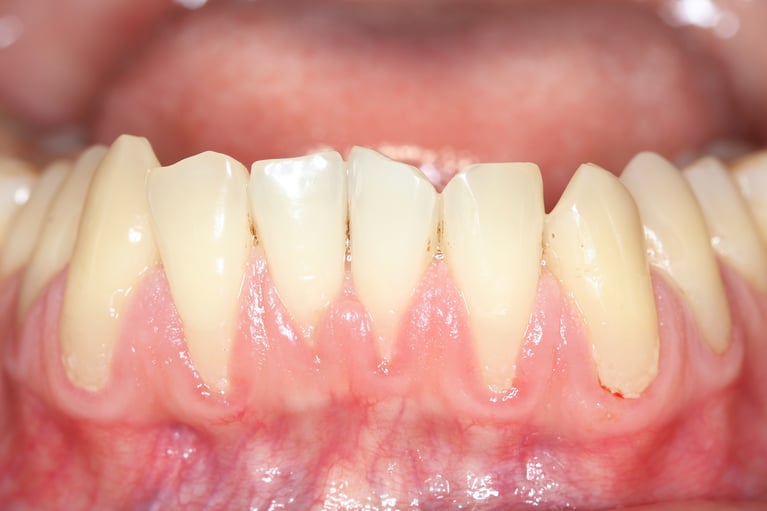
Receding Gums in Singapore Causes, Treatment & Cost

What are receding gums? Receding gums happens when the gums draw back from the teeth, hence exposing the roots underneath. The condition is common -...

Mercury-Based Dental Fillings: Global Shifts and Nuffield Dental’s Clinical Approach

Why the Global Phase-Down Is Happening Mercury is listed by the WHO as one of the top ten chemicals of public health concern. In dentistry, the...