Locate Us

Endodontist: Specialist in Root Canal Treatment

tooth leaning right tooth leaning left big tooth big tooth
root-canal-treatment-1

What Is An Endodontist?

Endodontists are dental specialists who focus on diagnosing and treating problems within the tooth’s pulp — the innermost layer containing nerves and blood vessels. The endodontic unit offers treatments aimed at preserving teeth where clinically appropriate, utilising  equipment like dental operating microscopes, ultrasonics, and digital imaging.

In Singapore, a significant proportion of complex root canal treatments are managed by endodontists. These specialists go through years of additional training to master procedures like root canal therapy, ensuring your natural teeth are saved whenever possible.

At Nuffield Dental, we recognised this issue and took action. If you have a complex root canal issue and your dentist is not an endodontist, they would have to refer you to another dental specialist from another clinic, an endodontist. When a dentist refers to you this way, there are sometimes additional referral costs that are passed to the patients, prolonged treatment times or incomplete care. That’s why we have in-house endodontists to manage complex root canal cases within the clinic.

When Should I Call An Endodontist?

  • Persistent Tooth Pain: If you’re experiencing persistent or severe tooth pain for several days, it may be time to consult an endodontist
  • Tooth Trauma or Injury: If you’ve had an accident that damaged your tooth—whether it’s chipped, cracked, or knocked out (tooth avulsion) — an endodontist can help save it. Early assessment may improve the likelihood of preserving the tooth.
  • Deep Tooth Decay or Cavities: When cavities penetrate deep into the tooth, your regular dentist may recommend seeing an endodontist. Root canal treatment is often the best solution to clean out the decay and save the tooth.
  • Gum Swelling or Abscess: An abscess is a serious issue that requires immediate attention. If you notice a bump on your gum that resembles a pimple, it could indicate a bacterial infection. If left untreated, the infection may spread if left untreated and should be assessed by a dental professional.

These specialists are experts in diagnosing and treating complex dental issues that affect the inner structures of the tooth, such as the pulp and root canals. Waiting too long can worsen the problem, leading to more extensive and costly treatments — or even tooth loss.

Seek prompt dental assessment if you injure your mouth in an accident or experience possible signs of infection, such as:

  • Fever
  • Difficulty breathing or swallowing
  • Redness or swelling in your mouth that expands to your cheek

When Should I Call An Endodontist?

rb_92741 (1)

Why Is Seeking Help for Tooth Pain Important?

When you experience severe tooth pain or sensitivity, it’s often a sign of pulp damage or infection. If left untreated, these problems can worsen, leading to abscesses, bone loss, or even tooth extraction. Endodontists specialize in addressing these issues with precision and care, to reduce the risk of further complications.

Why Is Seeking Help for Tooth Pain Important?

18990

Common Reasons To See An Endodontist

  • Tooth Decay: Tooth decay is a common reason to visit an endodontist. Poor oral hygiene allows bacteria to damage your teeth, often causing a dull ache or sharp pain, especially when eating sweets. If left untreated, decay can reach the tooth's inner tissues, leading to inflammation or infection, which requires specialized care.
  • Tooth Injuries: Accidents, such as a fall or a sports injury, can result in chipped or fractured teeth. These injuries can damage the tooth's inner structures, causing pain and sensitivity. An endodontist can evaluate the damage and provide targeted treatment to preserve your tooth.
  • Tooth Abscess: A tooth abscess is a painful condition caused by bacteria entering your tooth or gums, forming a pocket of pus. Symptoms may include swelling, throbbing pain, and a bad taste in your mouth. Endodontic care may be required to manage the infection, prevent it from spreading, and ensure long-term healing.
  • Cracked Teeth: Biting down on something hard can cause sudden sharp pain and leave a crack in your tooth. These cracks can allow bacteria to infiltrate, leading to infection and discomfort. An endodontist can explore the cracks, perform biopsies if necessary, and treat the issue to save your tooth.
  • Discolouration of Tooth: Discolouration of a tooth can indicate underlying issues such as infection or damage to the tooth’s nerve, which may require endodontic treatment. If a tooth becomes darkened or discolored, it could be a sign of pulp necrosis (death of the tooth’s nerve) or an abscess, both of which may need intervention to prevent further damage or infection. Seeing an endodontist ensures proper diagnosis and treatment to save the tooth.
  • Severe Tooth Sensitivity: Sharp pain or discomfort when eating hot, cold, or sweet foods could indicate nerve damage or an issue in the tooth pulp. Endodontists specialize in diagnosing and treating the causes of sensitivity, potentially saving your tooth and preventing more serious complications.
  • Recurrent Infections: If a root canal-treated tooth hasn’t healed despite adequate treatment, or if conventional non-surgical retreatment isn’t recommended, an endodontist can step in. Advanced procedures, such as surgical retreatment, may be necessary to clear persistent infections and ensure proper healing. In some cases, these interventions can involve:
    • Retreatment to address underlying issues.
    • Exploring cracks or fractures in the root.
    • Performing biopsies or removing cysts or growths.
    • Combining conventional root canal retreatment with surgical approaches for complex cases.

Benefits Of Seeing an Endodontist

  • May Help Preserve Natural Teeth: Endodontists specialize in saving your natural teeth, and may help them to remain healthy and functional. Their training allows them to perform  procedures, such as root canal therapy, which may help to restore and preserve even severely damaged teeth.
  • Management of Complex Dental Conditions: Endodontists are dental professionals trained to manage conditions involving tooth pain, deep infections, and complex root canal systems. They are involved in treating cases that may require specialised attention to help retain natural teeth.
  • Support for Jaw and Bite Function: Endodontic treatment plays a role in supporting the alignment of nearby teeth, helping to maintain natural bite function. This may contribute to effective chewing and speech.
  • Infection Control and Prevention: Endodontists are trained in techniques aimed at removing infected dental tissues while preserving surrounding structures. This may help manage the spread of infection and support ongoing oral health.
  • Treatment Planning and Tooth Preservation: Endodontic care focuses on preserving natural teeth where possible. This approach may help reduce the need for more extensive procedures and contribute to long-term treatment planning.
  • Contribution to Oral Health Maintenance: Preserving the natural tooth structure can support overall dental function and alignment. Endodontists contribute to the broader goal of maintaining oral health through the management of root-related conditions.
  • Restorative Care: Endodontic treatment may help retain the appearance and function of the natural tooth. This can support the integrity of the patient's smile and overall oral structure.
  • Reduced Need for Further Intervention: By addressing conditions at the root level, endodontic care can play a role in limiting the extent of future dental procedures, supporting ongoing oral health outcomes.

Endodontics Procedures

  • Root Canal Treatment: Root canal treatment is one of the most common endodontic procedures. It is necessary when you have severe tooth decay or infection. During this procedure, the dentist removes the damaged or infected tooth pulp, cleans the inside of the tooth, and fills it to prevent further complications. In cases where a previous root canal treatment has not healed properly, endodontic retreatment may be required. This involves removing and replacing the old filling materials and addressing any new infections or complications.
  • Apicoectomy: An apicoectomy is a specialized endodontic surgery performed when root canal treatment hasn’t been successful. The dentist removes the tip of the tooth’s root and seals it to prevent further infections. This procedure is often the last resort to save the natural tooth.
  • Emergency Endodontic Surgery for Severe Dental Injuries: In cases of severe dental injuries, emergency endodontic surgery may be necessary. This could involve repairing complex tooth fractures or treating acute infections causing significant pain or swelling. Prompt care is critical to preserve the tooth and alleviate discomfort.
  • Tooth Extraction for Irreparable Damage: When a tooth is too damaged to save, tooth extraction becomes unavoidable. In such cases, an endodontist can safely remove the tooth to prevent further complications, such as the spread of infection or structural issues in the mouth.
  • Vital Pulp Therapy for Developing Teeth: Vital pulp therapy focuses on preserving the health of the pulp in teeth affected by decay or trauma. This endodontic procedure is particularly beneficial for young patients with developing teeth, ensuring the continued growth and strength of their natural dentition.
  • Dental Implants: Restoring Function and Aesthetics: Endodontists also specialize in dental implant surgery, which involves placing an artificial tooth root to support replacement teeth. Dental implants help restore the functionality of your bite while maintaining the appearance of a natural smile.

How Does An Endodontist Test A Tooth?

  • Tapping on teeth: This helps spot inflammation and how far it has spread.
  • Bite tests: You'll bite on an object to find cracked teeth.
  • Thermal tests: Hot or cold stimuli are applied to see how your tooth nerves react.
  • Dental X-rays: These show clear details of your tooth structure.
  • Electric pulp tests: A safe, low voltage current checks your tooth's nerve fibres.
  • Visual exam: The endodontist looks for signs of infection or bite issues.
  • Imaging: Special tools like 3D scans show the inside of your tooth.
  • Periapical tests: These help find the problem tooth and check your bite.

These tests help your endodontist make the right diagnosis. They'll use a mix of methods to get a full picture of your tooth health.

Remember, each test is quick and painless. Your comfort is a top priority during the exam.If you're nervous, just let your endodontist know. They're there to help and will  explain each step. 

Don't worry if you need more than one test. It's normal and helps ensure you get the right treatment. Your endodontist wants to give you the best care possible.

Root Canal Treatment Procedure

Before the Procedure

  1. Examination and Diagnosis:
    • Your dentist will carefully examine your tooth and take dental X-rays to assess the extent of the damage. These images allow them to see inside your tooth and pinpoint the issue.
    • Common causes for root canal treatment include deep cavities, cracks, injuries, or infections that reach the tooth's pulp.
  2. Discussion and Planning:
    • Your dentist will explain their findings and discuss why the treatment is necessary. They’ll address any concerns you have, ensuring you fully understand the procedure and its benefits.
    • If you experience anxiety, let your dentist know. They may offer options like sedation or relaxation techniques to make your visit more comfortable.
  3. Preparation:
    • Your dentist will create a tailored treatment plan to address your specific needs, ensuring the best possible outcome for your tooth.
    • They may advise you to eat a light meal beforehand, as the treated area might feel sensitive post-procedure.

During the Procedure

  1. Numbing the Area:
    • To ensure you don’t feel pain, your dentist will administer local anesthesia to numb the area around the affected tooth. They will test the area to confirm the numbing effect before starting the treatment.
  2. Accessing the Tooth:
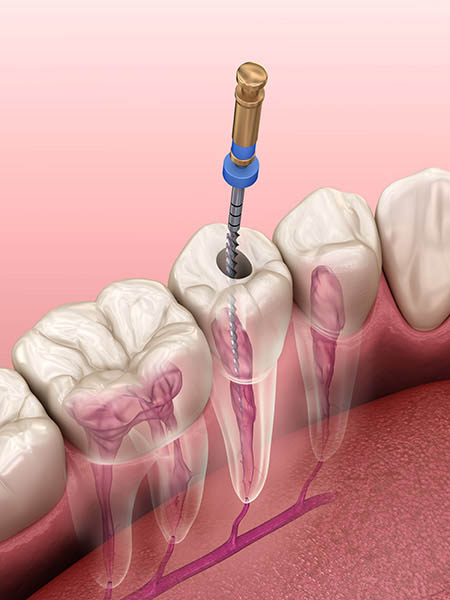
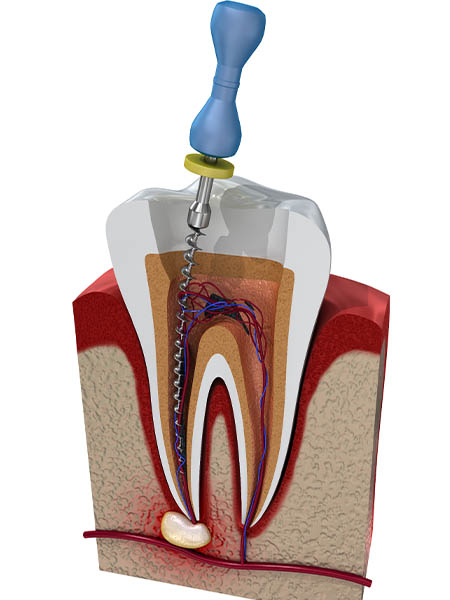
    • The dentist will carefully create a small opening in the tooth's surface to access the pulp chamber and root canals.
  3. Removing the Infected Tissue:
    • Using specialized tools, the dentist will remove the damaged or infected tissue from the pulp chamber and root canals. This eliminates harmful bacteria that caused the infection.
  4. Cleaning and Shaping:
    • The root canals will be meticulously cleaned and disinfected using advanced instruments and antibacterial solutions.
    • The dentist will then shape the canals to prepare them for sealing, ensuring the material fits snugly and prevents future bacterial entry.
  5. Filling and Sealing:
    • After cleaning and shaping, the canals are filled with a biocompatible material called gutta-percha. This seals the canals to block out bacteria and preserve the tooth's structure.
  6. Temporary Restoration (if needed):
    • In some cases, a temporary filling is placed to protect the tooth until a permanent crown or filling is applied during a follow-up visit.

During the Procedure

  1. Immediate Care:
    • Once the procedure is complete, you may experience mild soreness or sensitivity as the anesthesia wears off. This is normal and usually resolves within a few days.
    • Over-the-counter pain relievers, such as ibuprofen, can help manage any discomfort. Your dentist may provide specific recommendations based on your needs.
  2. Eating and Chewing:
    • Avoid eating until the numbness has completely worn off to prevent accidentally biting your tongue or cheek.
    • Stick to soft foods and avoid chewing with the treated tooth, especially if a temporary filling is in place.
  3. Oral Hygiene:
    • Continue your regular brushing and flossing routine, but be gentle around the treated tooth.
    • Use a soft-bristled toothbrush and non-abrasive toothpaste to minimize irritation.
    • Rinse with warm saltwater if your dentist recommends it to reduce swelling and promote healing.
  4. Follow-Up Appointments:
    • A follow-up visit is essential to ensure proper healing. If you have a temporary filling, your dentist will replace it with a permanent filling or crown to strengthen and protect your tooth.
    • During this visit, the dentist will also check the tooth for any signs of infection or other issues.
  5. Long-Term Care:
    • Practice good oral hygiene, including brushing twice a day, flossing daily, and attending regular dental check-ups.
    • Avoid biting hard objects or using your teeth as tools, as this could damage the restored tooth.
    • Let your dentist know immediately if you notice persistent pain, swelling, or any unusual symptoms.

Risks Of Not Seeing An Endodontist

  1. Untreated Tooth Infection Can Spread
    • Neglecting to see an endodontist for a tooth infection risks the bacteria spreading to nearby tissues, causing abscesses, facial swelling, and more serious infections in rare cases.
    • Additionally, untreated pulp issues inside teeth can lead to irreversible damage, making it harder to save teeth. Timely treatment with a root canal can not only prevent these complications but also preserve your natural teeth and protect your overall oral health.
  2. Permanent Tooth Loss
    • Without specialized intervention, damaged or infected teeth may become irreparable, resulting in extraction. Losing a natural tooth can affect aesthetics, chewing ability, and overall oral health.
  3. Compromised Oral Function
    • An untreated infection can lead to chronic pain and sensitivity, making it difficult to eat, speak, or maintain a normal daily routine.
  4. Higher Treatment Costs in the Future
    • Delaying endodontic care may result in more extensive treatments like extractions, implants, or bridges, which are costlier and more invasive than early intervention.
  5. Increased Risk of Systemic Health Issues
    • Oral infections can contribute to serious conditions like heart disease, diabetes, and weakened immune response, underscoring the importance of timely care.
  6. Chronic Pain 
    • Without proper treatment, patients often endure persistent toothache or discomfort, impacting sleep, productivity, and mental health.
  7. Complications from Incomplete or Incorrect Treatment
    • General dentists may lack the expertise to handle complex root canal cases, leading to incomplete treatment, reinfection, or further complications.

It's crucial to remember that these risks are generally quite low. Root canal treatments are widely performed, with outcomes depending on individual clinical factors.

Your endodontist will discuss any potential risks with you before treatment and take steps to minimise them. To ensure the best results, follow your endodontist's aftercare instructions carefully.

If you notice any unusual symptoms after treatment, contact your dental professional promptly for advice.

Cost Of Seeing An Endodontist in Singapore

Here's a breakdown of common endodontic procedures and their price ranges:

Root Canal Treatment:

SGD 500 - SGD 2,000 per tooth

This treatment removes damaged pulp and seals the tooth to prevent reinfection. The price depends on the tooth's location and the complexity of the case.

Endodontic Retreatment:

 SGD 800 - SGD 2,500 per tooth

If a previous root canal didn't heal properly, retreatment may be necessary.

This procedure tends to be more complex and costly than initial root canal therapy.

Endodontic Surgery:

 SGD 1,000 - SGD 3,000 per tooth

Specialised surgeries like apicoectomy (root-end removal) fall into this category. The cost reflects the intricate nature of these procedures.

Emergency Dental Surgery:

 SGD 200 - SGD 500 (consultation fee) Additional costs for treatment

Urgent care for severe infections or dental injuries may incur extra charges beyond the initial consultation fee.

Dental Implant Surgery:

 SGD 3,000 - SGD 6,000 per implant

While not strictly endodontic, some endodontists offer implant services to replace teeth that can't be saved.

Remember, these are estimated ranges. Your actual costs may differ based on the clinic you choose and your specific dental needs.

Are There Subsidies For Seeing An Endodontist In Singapore?

what-is-a-root-canal

Are There Subsidies For Seeing An Endodontist In Singapore?

Yes, there are subsidies available for certain endodontic treatments in Singapore. Here’s how you can reduce your out-of-pocket costs:

CHAS (Community Health Assist Scheme):

Root canal treatments are subsidized under CHAS, making it more affordable for eligible patients. You can receive subsidies for up to two root canal treatments per year. CHAS also provides assistance for up to four dental crowns annually, which are often needed after root canal treatment to restore the tooth's strength.

Eligibility and Conditions:

To access CHAS benefits, you must visit a participating CHAS dental clinic. The dentist will assess your eligibility and ensure you meet the criteria in order to claim subsidies.

Why Choose Nuffield Dental for Endodontics Treatment?

  • Singapore (NDCS) prior to joining Nuffield Dental. 
  • Nuffield Dental provides endodontic services delivered by registered specialists.
  • Technology Used: At Nuffield Dental, we use tools such as 3D CBCT imaging, dental operating microscopes, and ultrasonic systems to support diagnosis and treatment planning,
  • Convenience at Every Turn: With a network of 11 dental clinics strategically located across Singapore, we’ve made it easy for you to drop by if you need urgent or quick dental care. 

Endodontist Vs Dentist

General dentists are your primary dental care providers. They handle routine check-ups, cleanings, fillings, and basic dental procedures. Think of them as your go-to for everyday oral health needs.

Endodontists, on the other hand, are specialists who focus on the inside of teeth. They're experts in root canal treatments and other procedures involving the tooth pulp and nerves.

Here's a quick comparison:

  • General dentists offer a wide range of services
  • Endodontists specialise in root canal treatments
  • All endodontists are dentists, but not all dentists are endodontists
  • Endodontists have 2-3 years of extra training after 4 years in dental school

You'll likely see a general dentist for most of your dental needs. But if you need a root canal or have a complex tooth problem, your dentist might refer you to an endodontist.

Endodontist Vs Orthodontist

Endodontists are the root canal experts. They deal with problems inside your teeth, like infected pulp or damaged nerves. If you have severe tooth pain or need a root canal, an endodontist is your go-to specialist.

Orthodontists, on the other hand, specialise in teeth and jaw alignment. They're the ones who fit braces and other devices to straighten your teeth and correct bite issues. If you have crooked teeth or an overbite, you'll likely see an orthodontist.

Here's a quick comparison:

Endodontist Orthodontist
Treats tooth interior Aligns teeth and jaws
Performs root canals Fits braces and aligners
Relieves tooth pain Corrects bite problems

Both specialists play important roles in maintaining your dental health.

Your general dentist can refer you to the right specialist based on your specific needs.

Remember, regular check-ups with your dentist can help catch issues early, potentially saving you from more complex treatments down the line.

Endodontist Vs Orthodontist

3136 (1)

Endodontist Vs Periodontist

Endodontists deal with the inside of your teeth, while periodontists specialise in treating the tissues surrounding your teeth. 

The endodontist’s advanced training is centered on diagnosing tooth pain, performing root canal treatments, and addressing other procedures related to the inner structure of the tooth. In many cases, a damaged tooth can be preserved through endodontic treatment, which is why endodontists proudly consider themselves specialists in saving teeth.

When you have tooth pain or infection, an endodontist is your go-to expert. They're trained to diagnose and treat problems within the tooth's pulp and root. Root canal treatments are their main area of expertise.

Periodontists, on the other hand, focus on your gums and the supporting structures of your teeth. If you have gum disease or need a dental implant, a periodontist is the specialist you'll want to see.

Here's a quick breakdown of their main areas of focus:

Endodontist:

  • Root canal treatments
  • Treating tooth pain and infections
  • Diagnosing complex tooth problems

Periodontist:

  • Treating gum disease
  • Performing dental implant procedures
  • Managing gum inflammation

Both specialists play crucial roles in maintaining your oral health.

Your general dentist can refer you to the right specialist based on your specific dental needs.

Endodontist Vs Periodontist

74138

A Comparison of Endodontists With Other Dental Experts

Category Endodontist General Dentist Orthodontist Periodontist
Focus Area Inside teeth (tooth pulp and nerves) General oral health and basic procedures Teeth and jaw alignment Supporting structures of teeth (gums and bones)
Primary Role Root canal treatments, pain relief Routine check-ups, cleanings, fillings, etc. Fits braces and aligners to straighten Treats gum disease, manages inflammation
Specialisation Diagnosing and treating complex tooth problems Wide range of general dental services Correcting bite issues and crooked teeth Dental implant placement and gum health
Training 2–3 years of extra training after dental school 4 years of dental school 2–3 years of orthodontic training after dental school 2–3 years of periodontal training after dental school
When to Visit Severe tooth pain, infection, or root canal For most everyday dental needs Crooked teeth, overbite, or jaw misalignment Gum disease, receding gums, or implants
Tools/Techniques Advanced tools for root canal comfort and success General dental tools Braces, aligners, and other alignment devices Scaling tools, grafting materials, implant systems

Our Team

View More

At Nuffield Dental clinic, your dental needs are cared for by our dedicated team of dentists.

Dr Sharon Ong

Specialisation

Endodontics

Training

BDSc (Australia)

FAQs

What Kind of Training Does an Endodontist Receive?

Endodontists are dentists who specialise in saving teeth. They complete dental school, just like all other dentists, which takes about four years. But then they go on to receive at least two more years of specialised training in diagnosing and treating tooth pain and performing procedures like root canals. This extra training focuses on the inside of the tooth, allowing them to address problems that might otherwise lead to tooth loss.

Think of it this way: all endodontists are dentists, but only a small percentage of dentists are endodontists – less than 3%! This makes them true specialists in their field, similar to how a doctor might specialise in cardiology or surgery.

Why Would a Dentist Refer You to an Endodontist?

Your dentist may refer you to an endodontist for complex cases, such as teeth with unusual root structures or severe infections.

Endodontists have specialised equipment and expertise to handle challenging root canal treatments.

Are Endodontists Better at Root Canals?

Endodontists perform root canals more frequently than general dentists, often completing 25 per week.

Their specialised training and experience can lead to more precise treatments and better outcomes, especially for complex cases.

Can an Endodontist Save a Tooth?

Yes, endodontists specialise in saving teeth.

They use advanced techniques to treat severely damaged or infected teeth that might otherwise need extraction.

Their goal is to preserve your natural teeth whenever possible.

Are Endodontists More Costly?

Endodontists may charge more than general dentists due to their specialised training and equipment.

However, their expertise can lead to more successful treatments, potentially saving you money on future dental work.

Can Endodontists do Fillings?

While endodontists can do fillings, they typically focus on root canal treatments and related procedures.

After completing a root canal, they often place a temporary filling before referring you back to your general dentist for a permanent one.

Can Endodontists do Crowns?

Endodontists usually don't place permanent crowns.

They may put on temporary crowns after root canal treatment, but you'll typically return to your general dentist for the permanent crown.

Can a Root Canal Last a Lifetime?

With proper care, a root canal can last a lifetime.

Regular dental check-ups, good oral hygiene, and avoiding biting on hard objects can help maintain the treated tooth.

Are Root Canals Covered by Insurance?

Many dental insurance plans cover root canal treatment, often classifying it as a basic or major procedure.

Coverage varies, so check with your provider to understand your specific benefits.

What Happens if a Calcified Root is Left After a Root Canal?

A calcified root can make future treatments more challenging.

Your endodontist will assess the situation and may recommend additional procedures or monitoring to ensure the tooth remains healthy and functional.

Medical References

Barnes JJ, Patel S, Mannocci F. Why do general dental practitioners refer to a specific specialist endodontist in practice? International Endodontic Journal. 2010;44(1):21-32. doi:10.1111/j.1365-2591.2010.01791.x

medical-appointment 1

Book an Appointment

Fill out the form for any request or questions you have and we will contact you within one working day.

Cost Of Root Canal Treatment In Singapore

implants

Cost Of Root Canal Treatment In Singapore

Root Canal Treatment Cost

The price varies according to the unique treatment prescribed to each individual patient. For example, if a root canal treatment is require for more than one root, the cost would go up as well. However, saving the tooth with a Root Canal treatment is relatively cost-efficient in the long run. 


A Root Canal Treatment procedure in Singapore's price ranges from S$500 - S$1700. However, the price may or may not include the crowning of the tooth and consultation charges. Average consultation prices of dental services in Singapore ranges from S$75- S$200. 

Root Canal Treatment FAQs

Is a Root Canal Treatment procedure painful?


  • The entire procedure will be done under local anaesthesia, so it will not be painful than getting your tooth filled or a wisdom tooth surgery. However, the affected area may cause discomfort and be slightly sore post-surgery but it goes away after a few days. 
  • If the pain persists, please consult our doctor immediately. You can reach us at +65 9839 7363.

    Can I go about my day to day activities after a Root Canal Treatment? 

  • Most patients are able to return to school or work the next day following a Root Canal Treatment. However, it is advised against eating immediately post-surgery as there may be numbness in the affected area. 


What are the side effects of a Root Canal Treatment?

  • The side effects of a Root Canal Treatment differs with each individual. Some people may experience pain or a slight soreness post-surgery, and some people may experience little to no pain at all. This also applies to certain patients experiencing a measured amount of sensitivity associated to cold or heat when consuming food or beverages. 

What is the aftercare for a Root Canal Treatment? 


  • As a Root Canal Treatment is considered a restorative procedure, the after-care is deemed crucial to experience lasting effects. After your procedure, your dentist will send you home with pain-killers to counter the soreness you may feel when the anaesthesia wears off. It is also strongly advised against the consumption of food until the numbness wears off. Brushing and flossing daily is encouraged to keep the area clean and this in turn would prevent infection. Upon completing any follow-up appointments for the Root Canal Treatment, you may be required to return to the dentist for a final crown to fully restore the tooth. A properly treated and restored tooth can last as long as your natural teeth. 

Can a Root Canal Treatment be unsuccessful? 


  • A Root Canal Treatment has a 90% success rate of fully restoring your tooth. However. failure to fully restore your tooth can occur if there is a loose crown, tooth fracture or decay. Undetected canal branches or an obstruction that causes the cleaning difficulties may also cause a Root Canal Procedure to fail. Should your Root Canal Treatment be unsuccessful, explore options with Nuffield's Endodontist for possible solutions. 


featured-logos
background image

Why Choose Nuffield Dental?

Nuffield Dental is a one-stop, multi-disciplinary dental care centre in Singapore. At Nuffield, we put you first. We believe in providing personalised service for each patient.

Dental care

Nuffield Dental is a one-stop, multi-disciplinary dental care centre. Here at Nuffield Dental, we pride ourselves of our personalised oral care for each and every one of our patients. We need to make sure you get all the help you need to make your dental procedures comfortable, accessible and seamless.

Root Canal Treatment

Our dentists have been accredited in root canal and oral surgery for 20+ years. We have accredited dental providers who are skilled in the area of dental implant surgery.

Articles

The newest and best lifestyle articles selected by our editorial team.

Mercury-Based Dental Fillings: Global Shifts and Nuffield Dental’s Clinical Approach

Why the Global Phase-Down Is Happening Mercury is listed by the WHO as one of the top ten chemicals of public health concern. In dentistry, the...

  • 17 Nov 2025
  • 2 mins read
Can dental amalgam be connected to brain fog, tiredness, or lethargy?

Current scientific evidence does not show a conclusive connection between intact dental amalgam fillings and symptoms such as brain fog, chronic...

  • 17 Nov 2025
  • 2 mins read
Why Do We Have to Wait Until 2034 to Phase Out Amalgam?

The Minamata Convention on Mercury established 2034 as the global target year to end the use of dental amalgam. While this may seem gradual, the...