Locate Us

Chipped Tooth: Symptoms, Assessment, And Treatment Options

tooth leaning right tooth leaning left big tooth big tooth
09_cracked teeth

What Is A Chipped Tooth?

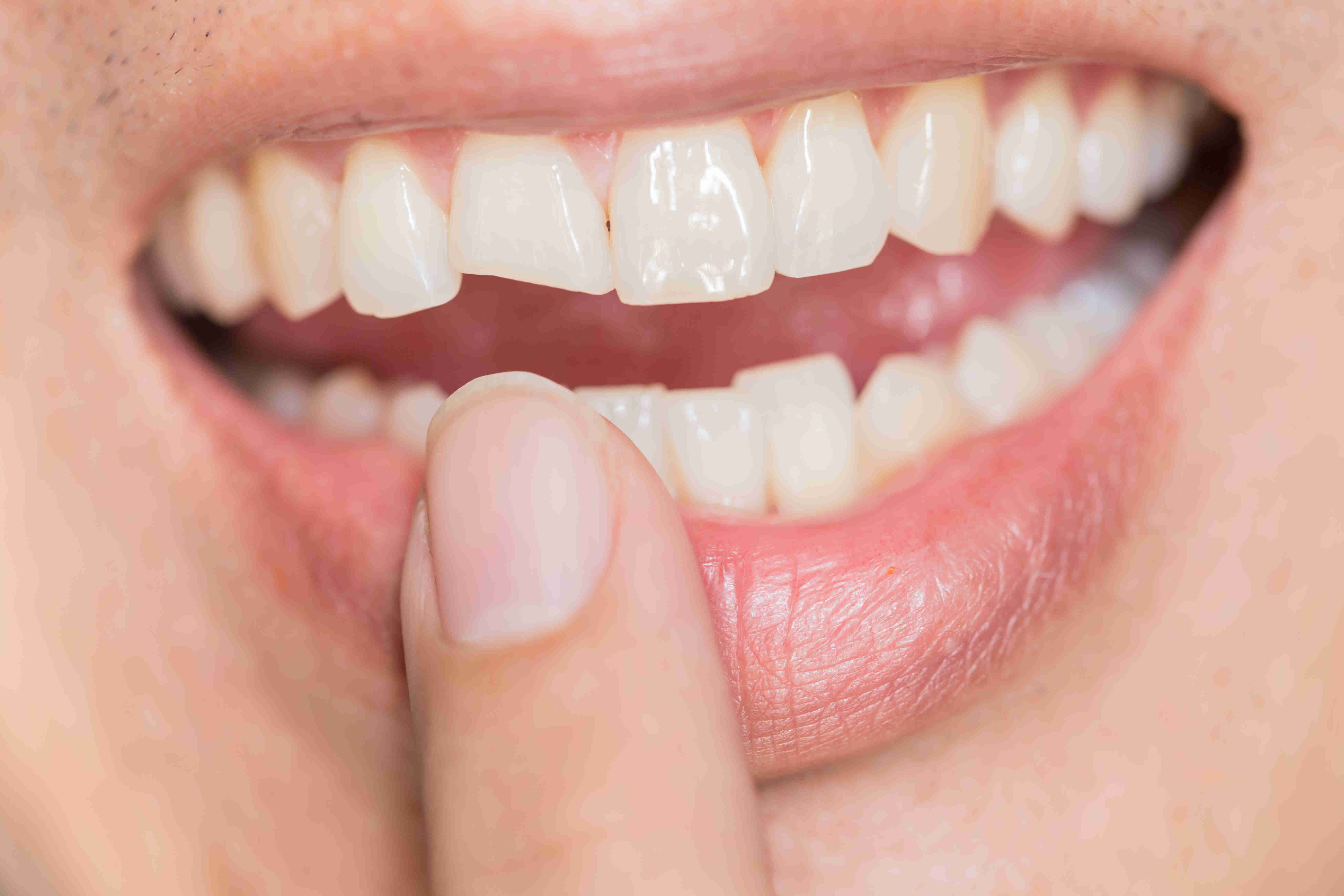
A chipped tooth means a small piece of the tooth has broken off – most commonly from the enamel, the hard outer layer that protects your tooth from daily wear and bacteria. Minor chips usually affect only the enamel, resulting in rough edges or mild sensitivity at most. But if the chip is deeper, it can reach the dentin (a softer layer connected to your tooth’s nerves) or even the pulp, which contains nerves and blood vessels, increasing the risk of pain or infection.

The severity of the chip helps your dentist decide what treatment is needed – from simple smoothing or bonding to more advanced procedures if the inner tooth is exposed.

Chipped Tooth Vs Cracked Tooth

Although both involve structural damage, a chipped tooth refers to a piece breaking off the surface, while a cracked tooth involves a split that may run deeper into the tooth. Understanding the difference helps determine the urgency and type of treatment needed.

Aspect Chipped Tooth Cracked Tooth
Definition A small piece of enamel has broken off. A deeper break that may reach dentine or pulp.
Visibility Often visible and may feel sharp. May be harder to spot.
Pain Not always painful. Pain is more likely, especially when chewing or with hot/cold foods.
Progression Usually worsens slowly if left untreated. Can spread if untreated.
Dental Attention Needs a check-up; usually fixed with simple repairs. Needs evaluation; may require more complex treatment.

Is A Chipped Tooth An Emergency?

A chipped tooth can be a dental emergency if there is pain, swelling, or uncontrolled bleeding, as these may suggest the damage has reached the deeper parts of the tooth, including the pulp (where nerves and blood vessels are found).

You should seek urgent dental care if you:

  • Notice a visible pink or red area inside the tooth (possible pulp exposure)
  • Have a large break where a significant part of the tooth is missing, especially if the tooth looks shortened, sharply jagged, or structurally weakened
  • See the tooth chipped very close to the gum line, where the remaining tooth may not be stable
  • Experience difficulty eating, speaking, or breathing due to pain or swelling
  • Notice the tooth turning dark yellow, grey, or black, which can signal internal damage
  • Have persistent bleeding from the tooth or gum area that does not stop with gentle pressure

If a piece of your tooth has broken off, try to find it. Rinse it gently (without scrubbing) and place it in cold milk or saliva to keep it moist. In some cases, your dentist may be able to reattach the fragment.

When in doubt, a dental check helps determine whether immediate care is needed.

How Serious is the Damage?

Minor enamel chips

These are small surface-level breaks at the edge of the tooth. They usually don’t cause pain or sensitivity, and may not require urgent treatment. However, it’s still helpful to mention them during your next dental visit — your dentist can smooth sharp edges, check for hairline cracks, and make sure no further wear or damage occurs.

Moderate chips

If your tooth feels rough, becomes sensitive to hot or cold, or causes occasional discomfort, these could be signs that the chip is deeper or affecting the dentin layer. In these cases, a timely dental check can help prevent worsening damage.

Severe breaks

When a large portion of the tooth is missing (e.g. more than just the corner or edge), the break reaches close to or below the gum line, or you see a visible red or pink spot inside the tooth (possible pulp exposure), urgent dental care is likely needed — especially if there’s strong pain, bleeding, or the tooth feels loose.

If you're unsure, gently examine the area and note any pain, bleeding, or visible changes. Providing this information to your dentist can help them guide your next steps more effectively.

Chipped Tooth Symptoms

  • Sharp or rough edge: The chipped surface may feel jagged or sharp to your tongue. This can sometimes lead to irritation in the surrounding cheeks or gums.
  • Pain when chewing: Some chips may cause sharp pain when you bite down.
  • Change in appearance: The chipped tooth may appear discoloured - darker or more yellow - if deeper layers are exposed.
  • Worsened by decay: If the chip occurs near a cavity or decayed area, symptoms may be more intense, and the tooth becomes more prone to further damage.
  • Gum irritation: Exposed edges or trapped debris may inflame nearby gums, increasing the risk of gum swelling or plaque buildup.
  • Food trapping: Food may repeatedly get stuck in the chipped area, increasing the risk of decay or gum irritation if not cleaned properly.

Chipped Tooth Causes

  • Accidents or dental trauma: Falls, collisions, or direct blows to the face, including during contact sports, can chip teeth. The front teeth are especially vulnerable as they tend to absorb the impact.
  • Biting hard foods or objects: Crunching ice, bones, or hard sweets places sudden pressure on enamel and can cause fractures.
  • Using teeth as tools: Tearing open packaging or holding objects in your mouth puts unnatural strain on the teeth.
  • Sudden temperature changes: Rapid shifts, such as sipping an ice-cold drink immediately after hot soup, may contribute to stress on the enamel, especially if the tooth structure is already compromised.
  • Tooth decay: Decay weakens the internal structure of a tooth. When enamel loses underlying support due to untreated cavities, it becomes more prone to chipping.
  • Bruxism (teeth grinding or clenching): Often linked to stress or sleep issues, bruxism wears down the enamel, especially along the edges, and makes teeth more brittle.
  • Uneven bite pressure: Misaligned teeth or gaps can cause certain teeth to absorb more force during chewing, increasing the risk of chips.
  • Compromised dental restorations: Large fillings, old dental work, or poorly shaped crowns may weaken surrounding enamel or create bite imbalance.
  • Acidic diet: Frequent intake of fizzy or acidic drinks softens enamel, reducing its resistance to physical stress.
  • Dry mouth: Reduced saliva limits natural enamel protection, making teeth more vulnerable to wear and chips.
  • Ageing: Enamel naturally thins over time, increasing the chance of chipping - especially when combined with other risk factors like decay or grinding.

Chipped Tooth Treatments

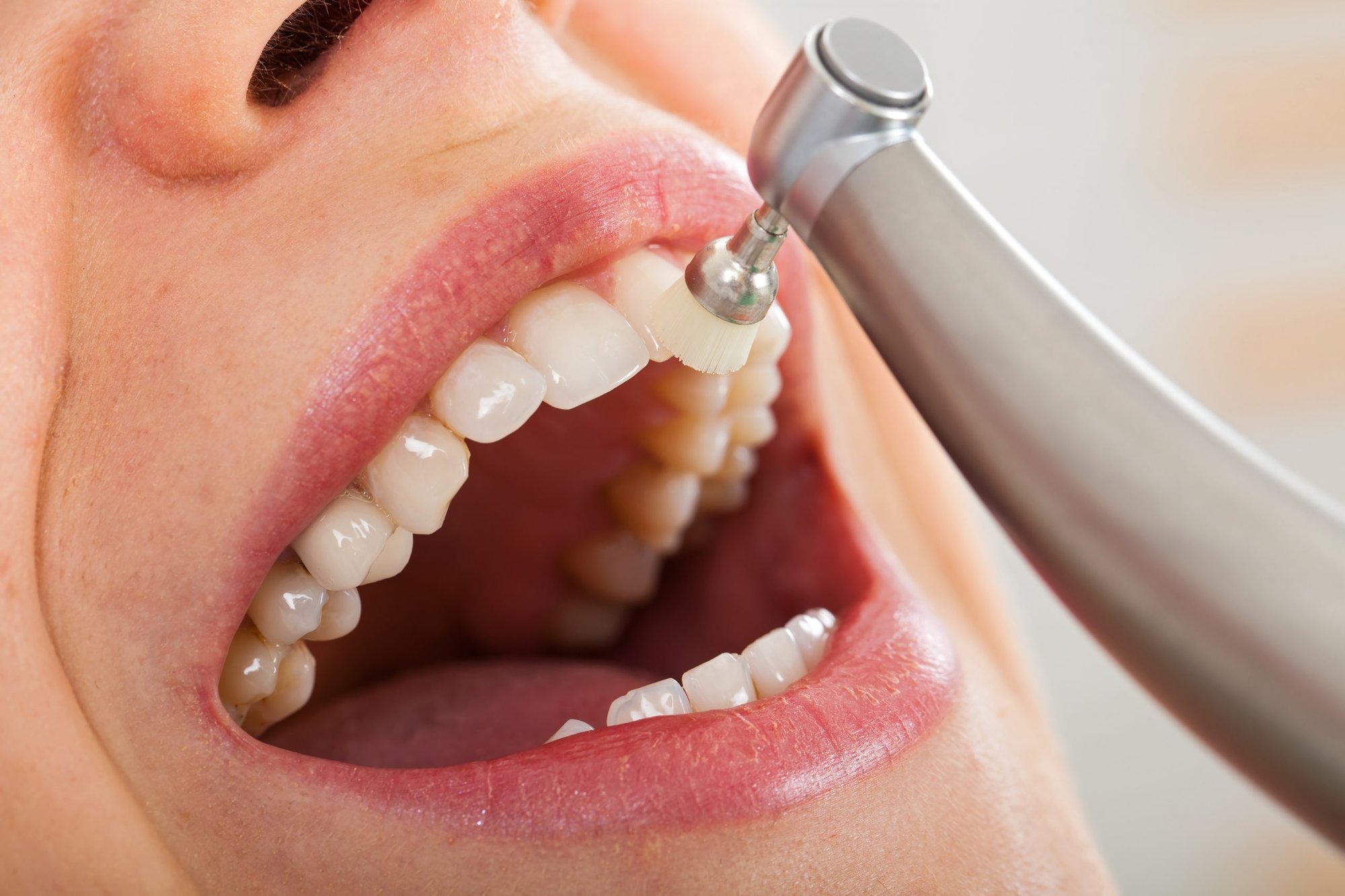
Polishing

For very small chips that don’t affect tooth function or sensitivity, your dentist may smooth the rough edge using a polishing tool. This improves comfort and appearance while minimizing changes to tooth structure.

scaling and polishing

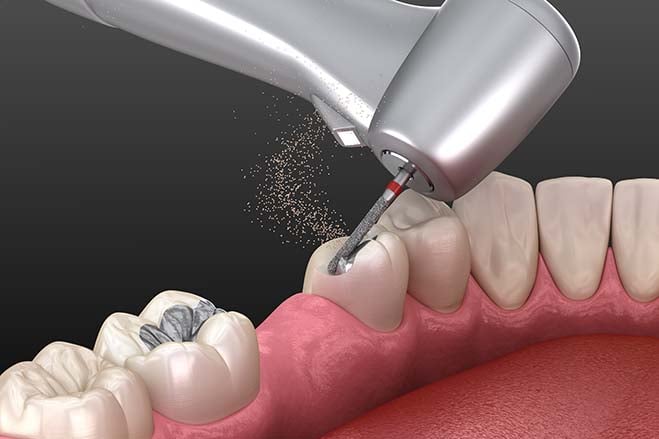
Dental Filling

Used when a chip affects the biting surface or inner layers of a back tooth. The dentist places a durable filling material into the damaged area to restore shape and function. Fillings are often used after removing decay or as part of post-root canal care.

dental-filling-dental-care-oral-health-1

Dental Bonding

Often used for small, visible chips on front teeth. The dentist first applies an adhesive, then attaches a tooth-coloured composite resin bonding material. This is shaped and hardened with a special ultraviolet light to match your natural tooth. Bonding is a conservative treatment option but may wear down over time if you grind your teeth or bite hard objects.

composite-bonding-smiling-girl-whitening-teeth-dental-care-oral-health-2

Root Canal Treatment

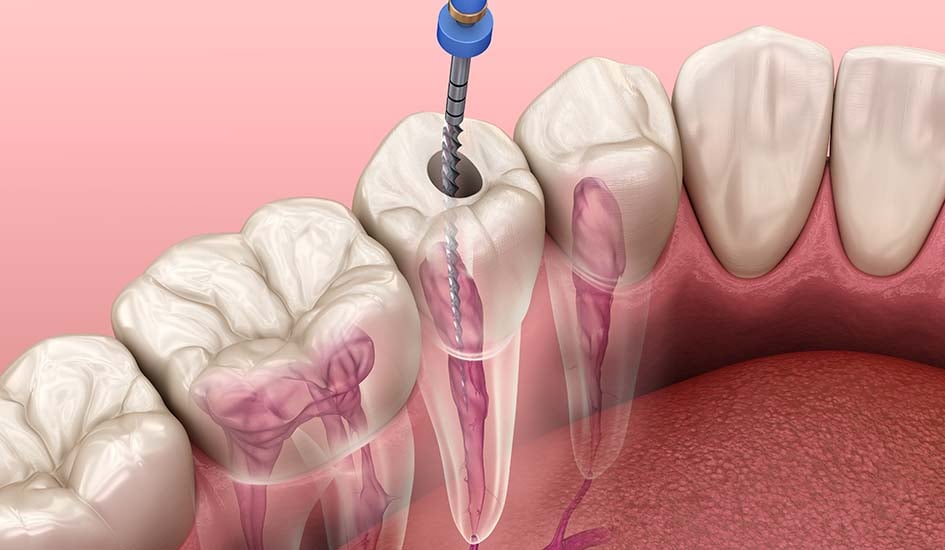
If a chip exposes the pulp, the inner part of the tooth containing nerves and blood vessels, a root canal may be necessary to prevent or treat infection. The dentist removes the damaged nerve tissue, cleans the root canal, and seals it. Afterward, a separate restoration such as a crown is typically placed to protect the tooth.

Root Canal Treatment-1

Dental Crowns

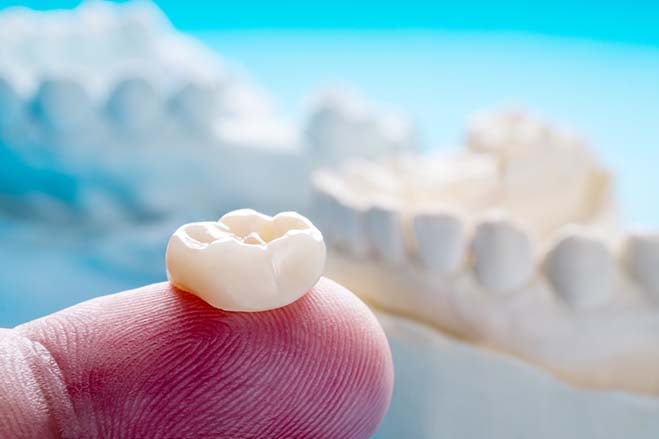
A crown is used when a large part of the tooth is missing, or when the remaining structure is weakened by cracks, decay, or after root canal treatment. The dentist reshapes the tooth and fits a custom-made crown over it, restoring strength, appearance, and function.

dental-crowns-smile-dental-care-oral-health-hand-taking-blue

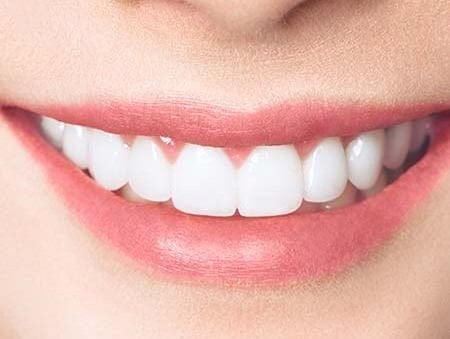
Veneers

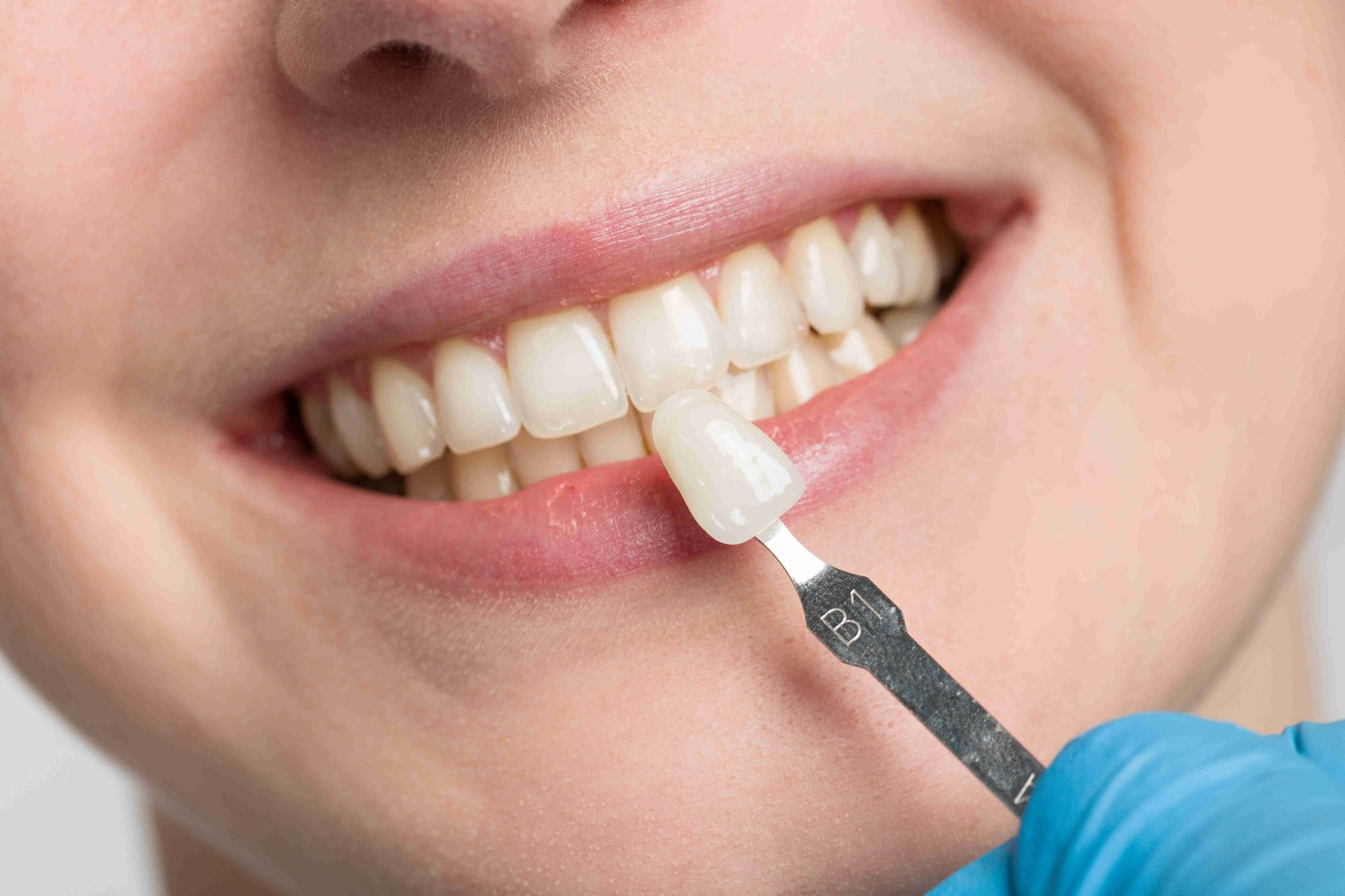
Thin shells placed on front teeth to cover small chips and improve appearance. Veneers are suitable when the chip is minor and structure loss is limited. They are not used for molars or deep cracks and require regular cleaning and monitoring.

08_Veneers visual

How to Choose A Chipped Tooth Repair Treatment

  • Extent of damage: Small surface chips may only need smoothing or bonding, while deeper or wider breaks often require fillings, crowns, or root canal treatment. This depends on how much tooth structure is lost or whether the pulp is exposed.
  • Type of damage and structural support needed: Minor cosmetic chips can be restored with bonding or veneers. But if the tooth is cracked or weakened, your dentist may recommend a crown (to cover and protect the tooth) or a post (a small rod placed inside the root canal for internal support before adding a crown).
  • Tooth function and bite pressure: Back teeth (molars) handle more biting force and often need more durable materials like porcelain-fused-to-metal crowns or composite fillings. Front teeth may be restored with aesthetic-focused options like bonding or ceramic veneers, especially if you don’t grind your teeth.
  • Aesthetic priorities: If the chipped tooth is visible when you smile, your dentist can recommend tooth-coloured materials and techniques that match your natural teeth. Options like bonding or veneers are often chosen for appearance.
  • Comfort and longevity: Some patients may prefer procedures such as bonding for their clinical efficiency and convenience, while others may opt for longer-lasting solutions like crowns, especially if they've had recurring issues.

A qualified dentist should explain each step, with the aim to support a durable result.

Chipped Tooth Repair Procedure

Before The Procedure

  • The dentist checks the size, depth, and location of the chipped tooth.
  • You’ll be asked about symptoms such as pain or sensitivity.
  • X-rays may be taken to assess the root and rule out cracks or nerve damage.
  • The dentist performs a bite check to find pressure points that could worsen the chip.
  • You may be advised to avoid hard foods before treatment.

During The Procedure

  • Your dentist may use a local anaesthetic to manage discomfort during the procedure.
  • They will then clean the area, smooth any jagged edges, and check your bite to ensure your teeth align properly.
  • Depending on the extent of the damage, your dentist will proceed with one of the following treatments:
    • For minor chips, a tooth-coloured composite resin may be applied, shaped, and hardened with a special light (bonding).
    • For larger chips, a crown may be fitted to restore function and protect the tooth.
    • If the pulp is exposed, a root canal treatment will be performed to remove damaged tissue before restoring the tooth.

After The Procedure

  • Avoid hard foods (e.g. nuts, ice) and sticky foods (e.g. toffee, chewing gum) for several days to protect the repaired area.
  • Brush twice daily with fluoride toothpaste and floss gently around the treated tooth to keep the area clean and prevent plaque buildup.
  • It’s normal to feel mild sensitivity to hot, cold, or pressure after bonding or crown placement.This usually resolves within a few days to a week.
  • If you experience ongoing pain, swelling, or the repaired tooth feels loose or uneven, contact your dentist.
  • Your dentist may schedule a follow-up appointment to monitor the repair, adjust your bite if needed, and help prevent future chipping — especially if grinding or bite pressure was a contributing factor.

Chipped Tooth Risks

  • Tooth sensitivity: A fresh chip can expose the dentine, leading to sharp discomfort when eating or drinking something hot, cold, or sweet.
  • Gum or tongue irritation: A jagged edge may rub against soft tissue, causing soreness or small cuts.

A clinical assessment helps determine the location and extent of the chip to guide timely and appropriate care before it worsens.

If you feel persistent pain, swelling, or notice that the repaired area feels loose or uneven, contact your dentist for a review.

Chipped Tooth Complications

  • Decay and infection: A chipped area may trap food and bacteria, increasing the risk of cavities - and in deeper chips, possible infection of the pulp.
  • Bite imbalance or jaw strain: Changes in tooth shape can affect how your teeth meet, placing strain on other teeth or jaw muscles.
  • Tooth discolouration or wear: Exposed inner layers may appear darker or wear down unevenly over time, affecting function and appearance.
  • Nerve exposure: Over time, continued wear or deepening of the chip can expose the tooth’s nerve, leading to intense pain and the potential need for root canal treatment.

Appropriate dental monitoring and care advice can help prevent long-term issues from untreated chips.

Chipped Tooth Repair Cost Singapore In 2026

Chipped Tooth Repair Treatment Type Cost (SGD $)
Dental Filling SGD $90 - SGD $300 per tooth
Dental Bonding SGD $160 - SGD $330 per tooth
Tooth Extraction SGD $70 - SGD $300 per tooth
Root Canal - Anterior (Front Tooth) SGD $350 - SGD $900 per tooth
Root Canal - Pre‑molar SGD $450 - SGD $1,000 per tooth
Root Canal - Molar SGD $700 - SGD $1,400 per tooth
Fixed Crown SGD $700 - SGD $2,500 per tooth
Veneers SGD $900 - SGD $2,500+

The suitable option will depend on your clinical goals, budget, and requirements.

Contact Nuffield Dental if you need help understanding your choices.

*All fees are subject to prevailing Singapore Goods and Services Tax.

*Fee adjustments may apply depending on the number of teeth treated.

Are There Subsidies For Chipped Tooth Repair In Singapore?

CHAS

Yes, you may receive subsidies for certain types of chipped tooth repair in Singapore if the treatment is considered medically necessary, and you visit a CHAS‑accredited dental clinic with a valid CHAS card. Cosmetic‑only repairs (e.g., veneers for purely aesthetic reasons) are generally not subsidised.

Subsidies vary by treatment type and CHAS card tier (Orange, Blue, Pioneer Generation, Merdeka Generation), with higher subsidy caps for elderly cardholders.

Treatment Type CHAS Orange CHAS Blue Pioneer Generation (PG) Merdeka Generation (MG)
Dental Filling  ~SGD $20 - SGD $33.50 ~SGD $30 - SGD $50   ~SGD $40 - SGD $55 ~SGD $40 - SGD $55
Dental Bonding (if claimable) ~SGD $20 - SGD $33.50 ~SGD $30 - SGD $50   ~SGD $40 - SGD $55 ~SGD $40 - SGD $55
Tooth Extraction ~SGD $28  ~SGD $48   ~SGD $78  ~SGD $78  
Root Canal - Anterior (Front) ~SGD $217.50   ~SGD $278.50   ~SGD $336   ~SGD $336  
Root Canal - Pre-molar ~SGD $308.50  ~SGD $388.50   ~SGD $472.50   ~SGD $472.50  
Root Canal - Molar ~SGD $389.50   ~SGD $499.50   ~SGD $594.50 ~SGD $594.50
Fixed Crown ~SGD $410   ~SGD $525   ~SGD $625   ~SGD $625  
Veneers Not subsidised  Not subsidised   Not subsidised   Not subsidised  

Notes:

  • Figures shown are maximum subsidy amounts. Actual costs depend on clinic fees.
  • Treatment must be medically necessary to qualify - cosmetic repairs are excluded.
  • You’ll need to visit a CHAS-participating dental clinic and present a valid CHAS/PG/MG card.
  • Always check with your clinic or CHAS website for the most updated rates.

MediSave

MediSave does not typically cover chipped tooth repair, as it is only claimable for surgical dental procedures. These include treatments like wisdom tooth surgery, dental implants, or jaw surgery.

However, if your chipped tooth requires surgical intervention (e.g., complex root canal retreatment or crown lengthening surgery), MediSave may apply on a case-by-case basis. Check with your clinic for claim eligibility.

Dental Insurance

Dental insurance coverage depends on your plan. Most basic plans do not cover cosmetic treatments like veneers or aesthetic bonding. However, some employer-provided or premium dental plans may cover restorative treatments like fillings, crowns, or root canals if deemed medically necessary.

You’ll need to check:

  • Whether the clinic is on your insurer’s panel
  • If pre-authorisation is required
  • The yearly dental claim limit

How Nuffield Dental Can Help You Manage Your Chipped Tooth

  • Integrated dental care: We provide access to various dental professionals, including endodontists, for cases involving deeper structures like the pulp.
  • Tooth-conserving approach tailored to damage level: Depending on the size and location of the chip, your dentist may suggest conservative options such as polishing a rough edge, rebuilding the tooth shape with tooth-coloured composite, or protecting it with a crown. The goal is to preserve as much of the natural tooth as possible, while aiming to restore comfort and function.
  • Guided decision-making and home care support: You’ll receive advice on how to care for your chipped tooth at home - including dietary precautions and hygiene tips - and be given time to consider your options. Your dentist provides information on the benefits and limitations of each treatment to facilitate an informed choice.

If you’ve chipped a tooth and are unsure what to do next, you can book a consultation to explore your treatment options. A clinical assessment helps determine what care is suitable for your condition.

Preventing Chipped Teeth

  • Consistent daily oral care: Brush twice daily with fluoride toothpaste to strengthen enamel and clean between teeth each day to remove plaque and trapped food.
  • Routine dental check-ups: Regular visits allow for the early detection of wear or decay that may weaken the tooth structure.
  • Avoid biting hard objects: Items like ice cubes, hard sweets, pens, or nails can place sudden stress on enamel and increase the risk of chips.
  • Protective dental appliances: A custom-fitted mouthguard for sports or a night guard for teeth grinding can reduce biting force and protect teeth from damage.
  • Make enamel-friendly choices: Choose chilled water instead of chewing ice, soft snacks over hard sweets, and sugar-free gum rather than chewing on pens or nails. Limit sugary or acidic drinks that can soften enamel - rinse with water afterwards and wait before brushing to prevent further erosion.
  • Monitor early warning signs: Sensitivity, rough edges, or small cracks may indicate early damage and should be checked promptly.

FAQs

Can you fix a chipped tooth yourself?

You cannot repair a chipped tooth at home. Home kits may hide sharp edges, but they do not restore tooth strength. A dentist checks the damage and treats it safely.

Can I regrow my chipped tooth?

No, chipped enamel cannot regrow. Unlike bones, teeth don’t heal or regenerate once enamel is lost. However, dentists can restore the tooth using bonding, fillings, or crowns depending on the extent of the damage.

Is it safe to brush and floss a chipped tooth?

Yes, but do so gently. Use a soft-bristled toothbrush and avoid applying excessive pressure near the chipped area. Floss carefully to remove plaque and food particles without aggravating the tooth.

Should I use glue or superglue to fix my chipped tooth?

No, never use glue or superglue on a chipped tooth. These substances are toxic if ingested and can damage your tooth or gums. Only a dental professional should perform repairs.

How is a child’s chipped tooth different than an adult’s?

Chipped teeth are common in both children and adults, but the approach differs. For children, the main concern is protecting the developing permanent tooth beneath a chipped baby tooth. In adults, treatment depends more on the extent of the damage and overall tooth structure. Either way, it’s best to have the tooth checked by a dentist to decide on the next step.

What if my cracked tooth does not hurt?

Some cracks or chips may not cause pain at first. A dental evaluation can help determine if monitoring or treatment is needed.

Is it a concern if the crack is only visible under light?

Some hairline cracks are surface-level, while others may go deeper. A dental check-up is a recommended way to assess the clinical condition.

What if I only feel a rough edge but no discomfort?

Even without pain, a rough or sharp surface can cause irritation. A review can help address this and prevent potential issues.

Medical References

Goldstein, R. E., Chan, D. C., Myers, M. L., & Barrack, G. M. (2018). Chipped, Fractured, or Endodontically Treated Teeth. Ronald E. Goldstein's Esthetics in Dentistry, 720-746.

medical-appointment 1

Book an Appointment

Fill out the form for any request or questions you have and we will contact you within one working day.

Cost Of Root Canal Treatment In Singapore
implants

Cost Of Root Canal Treatment In Singapore

Root Canal Treatment Cost

The price varies according to the unique treatment prescribed to each individual patient. For example, if a root canal treatment is require for more than one root, the cost would go up as well. However, saving the tooth with a Root Canal treatment is relatively cost-efficient in the long run. 


A Root Canal Treatment procedure in Singapore's price ranges from S$500 - S$1700. However, the price may or may not include the crowning of the tooth and consultation charges. Average consultation prices of dental services in Singapore ranges from S$75- S$200. 

Root Canal Treatment FAQs

Is a Root Canal Treatment procedure painful?


  • The entire procedure will be done under local anaesthesia, so it will not be painful than getting your tooth filled or a wisdom tooth surgery. However, the affected area may cause discomfort and be slightly sore post-surgery but it goes away after a few days. 
  • If the pain persists, please consult our doctor immediately. You can reach us at +65 9839 7363.

    Can I go about my day to day activities after a Root Canal Treatment? 

  • Most patients are able to return to school or work the next day following a Root Canal Treatment. However, it is advised against eating immediately post-surgery as there may be numbness in the affected area. 


What are the side effects of a Root Canal Treatment?

  • The side effects of a Root Canal Treatment differs with each individual. Some people may experience pain or a slight soreness post-surgery, and some people may experience little to no pain at all. This also applies to certain patients experiencing a measured amount of sensitivity associated to cold or heat when consuming food or beverages. 

What is the aftercare for a Root Canal Treatment? 


  • As a Root Canal Treatment is considered a restorative procedure, the after-care is deemed crucial to experience lasting effects. After your procedure, your dentist will send you home with pain-killers to counter the soreness you may feel when the anaesthesia wears off. It is also strongly advised against the consumption of food until the numbness wears off. Brushing and flossing daily is encouraged to keep the area clean and this in turn would prevent infection. Upon completing any follow-up appointments for the Root Canal Treatment, you may be required to return to the dentist for a final crown to fully restore the tooth. A properly treated and restored tooth can last as long as your natural teeth. 

Can a Root Canal Treatment be unsuccessful? 


  • A Root Canal Treatment has a 90% success rate of fully restoring your tooth. However. failure to fully restore your tooth can occur if there is a loose crown, tooth fracture or decay. Undetected canal branches or an obstruction that causes the cleaning difficulties may also cause a Root Canal Procedure to fail. Should your Root Canal Treatment be unsuccessful, explore options with Nuffield's Endodontist for possible solutions. 


Orchard Dental

Nuffield Dental Jewel
Wheelock Place501 Orchard Road #05-01 Singapore 238880

The Nuffield Dental Clinic Network In Singapore

Seletar Dental

Nuffield Dental Seletar
Greenwich V
1 Seletar Road #01-07/08
Singapore 807011

Kovan Dental

Nuffield Dental Kovan
Simon Plaza
2 Kovan Road #01-03
Singapore 548008

Serangoon Dental

Nuffield Dental Serangoon Gardens
Serangoon Garden Estate
57 Serangoon Garden Way
Singapore 555953

Siglap Dental

Nuffield Dental Siglap
The Domain
914 East Coast Road #01-03
Singapore 459108

Bedok Dental

Nuffield Dental Simpang Bedok
East Village
430 Upper Changi Road #01-64
Singapore 487048

Holland Village Dental

Nuffield Dental Holland Village
7 Holland Village Way #03-16
Singapore 275748

Jurong East Dental

Nuffield Dental Westgate
Westgate
3 Gateway Dr #04-32
Singapore 608532

HarbourFront Dental

Nuffield Dental HarbourFront
HarbourFront Centre
1 Maritime Square #02-64A
Singapore 099253

Orchard Dental

Nuffield Dental Jewel
Wheelock Place
501 Orchard Road #05-01
Singapore 238880

Raffles Place Dental

Nuffield Dental Raffles Place
One Raffles Place
1 Raffles Place #05-19
Singapore 048616

featured-logos
background image

Why Choose Nuffield Dental?

Nuffield Dental is a one-stop, multi-disciplinary dental care centre in Singapore. At Nuffield, we put you first. We believe in providing personalised service for each patient.

Dental care

Nuffield Dental is a one-stop, multi-disciplinary dental care centre. Here at Nuffield Dental, we pride ourselves of our personalised oral care for each and every one of our patients. We need to make sure you get all the help you need to make your dental procedures comfortable, accessible and seamless.

Root Canal Treatment

Our dentists have been accredited in root canal and oral surgery for 20+ years. We have accredited dental providers who are skilled in the area of dental implant surgery.

Articles

The newest and best lifestyle articles selected by our editorial team.

Mercury-Based Dental Fillings: Global Shifts and Nuffield Dental’s Clinical Approach

Why the Global Phase-Down Is Happening Mercury is listed by the WHO as one of the top ten chemicals of public health concern. In dentistry, the...

  • 17 Nov 2025
  • 2 mins read
Can dental amalgam be connected to brain fog, tiredness, or lethargy?

Current scientific evidence does not show a conclusive connection between intact dental amalgam fillings and symptoms such as brain fog, chronic...

  • 17 Nov 2025
  • 2 mins read
Why Do We Have to Wait Until 2034 to Phase Out Amalgam?

The Minamata Convention on Mercury established 2034 as the global target year to end the use of dental amalgam. While this may seem gradual, the...