.png?width=2223&height=447&name=Background%20(4).png "Background (4)")


Dental Implants vs Dentures vs Bridges: Comparing Your Tooth Replacement Options
Losing a tooth — whether to decay, gum disease or an accident — is more common than most people think. The good news is that modern dentistry offers several reliable ways to replace missing teeth. The three most common options are dental implants, dentures and bridges. Each has its place, and the right choice depends on your oral health, your budget and your long-term goals.
Dental implants
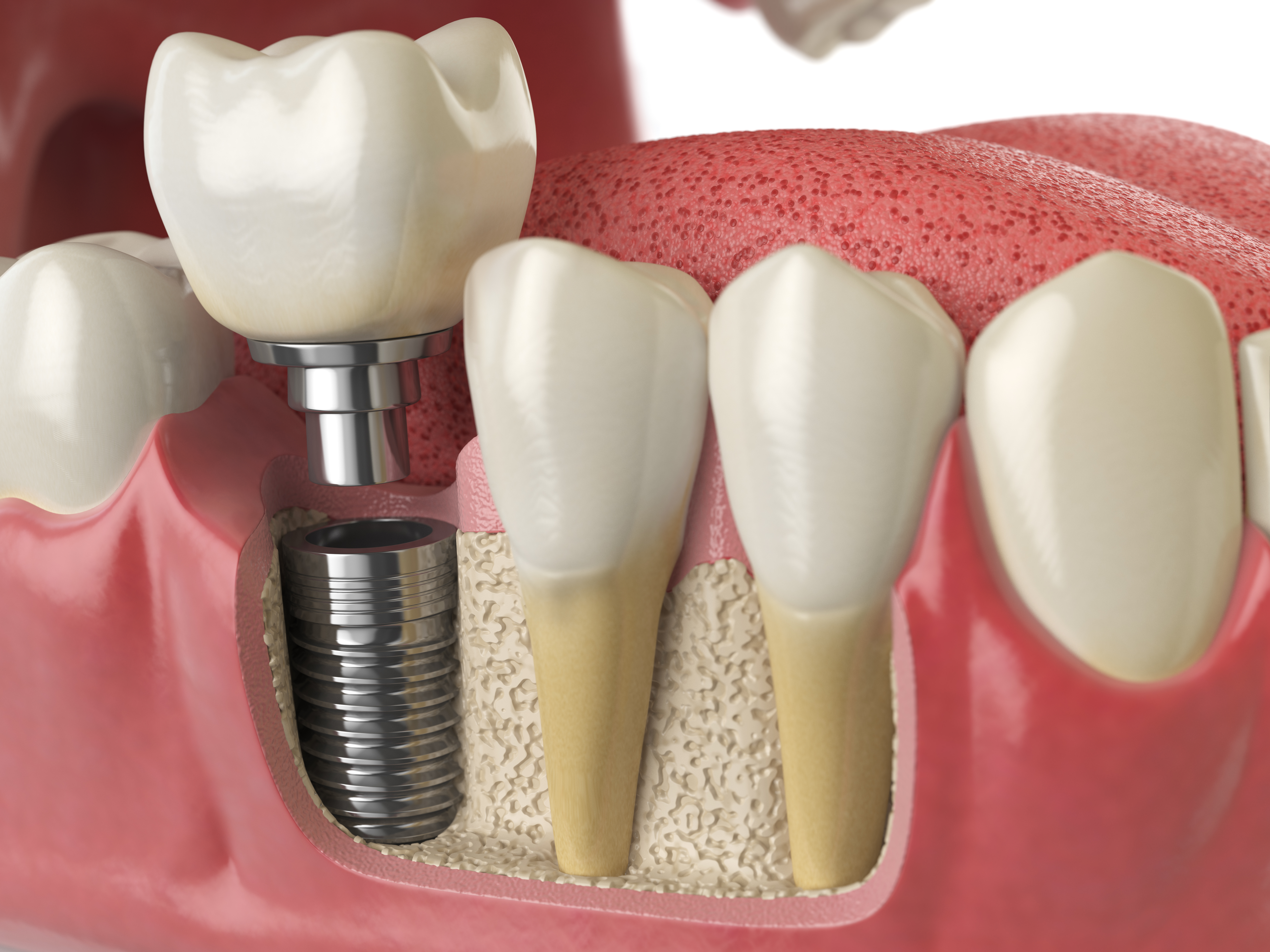
A dental implant is a small titanium or ceramic post that is placed into the jawbone to act as an artificial tooth root. Once it has healed, a crown is attached on top to replace the visible part of the tooth. Because the implant fuses with the bone, it feels and functions much like a natural tooth.
Implants are a good option for people who want a stable, long-lasting solution and who have enough healthy jawbone to support the post. They also help preserve the bone, which can shrink over time when a tooth is missing. Treatment usually takes several months from placement to final crown, as the implant needs time to integrate with the bone.
Dentures
Dentures are removable appliances that replace several or all of the teeth in an arch. They are typically the most accessible option and can be fitted relatively quickly. Modern dentures are far more comfortable and natural-looking than older versions, but because they sit on the gums rather than anchoring into bone, some people find they move slightly when eating or speaking. They also need to be removed for cleaning and may require occasional adjustment as the mouth changes over time.
Bridges
A dental bridge “bridges” the gap left by one or more missing teeth. A traditional bridge uses the neighbouring teeth as anchors, with a false tooth suspended between them. Bridges are fixed in place, look natural and are usually completed in a couple of visits. The main trade-off is that the supporting teeth often need to be reshaped to hold the bridge, which involves altering otherwise healthy teeth.
How to choose
There is no single “best” option — only the option that best fits your situation. As a general guide, implants suit those wanting the most durable, tooth-like replacement; bridges suit those who want a fixed solution without surgery; and dentures suit those replacing many teeth or looking for a more accessible starting point. Factors such as bone health, the number of teeth missing, general health and personal preference all play a part.
The best next step is a consultation with a dentist who can examine your mouth, take any necessary scans and talk through the pros and cons for your specific case. If you are considering tooth replacement, the team at Nuffield Dental is happy to help you understand your options and plan treatment that is right for you.
This article is for general information only and is not a substitute for professional dental advice. Please consult a qualified dentist about your individual needs.
-1.svg)