Locate Us

SomnoDent

tooth leaning right tooth leaning left big tooth big tooth
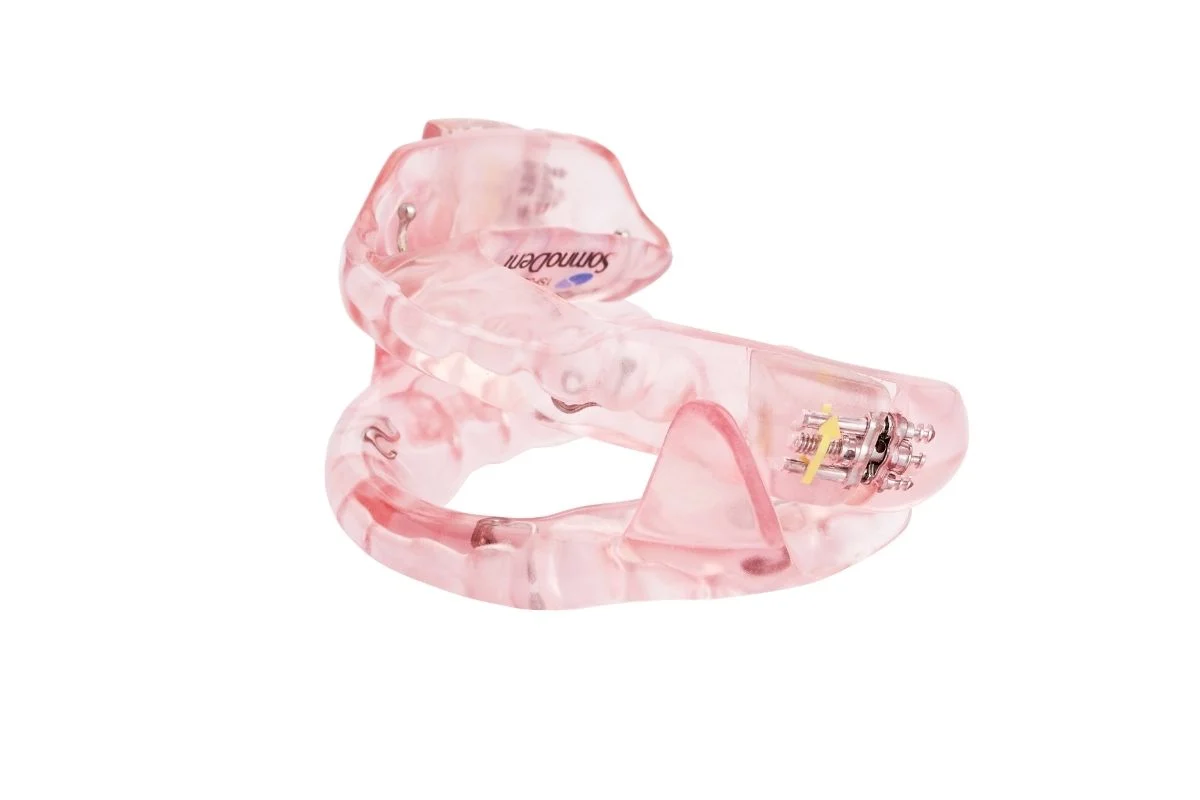
somnodent splint mouthguard

The sleep study came back saying you stop breathing dozens of times an hour, and the CPAP machine you were offered is still in its box because you could not tolerate the mask. That is a situation some patients encounter, and oral appliances may be considered as an alternative for suitable patients who cannot tolerate CPAP.


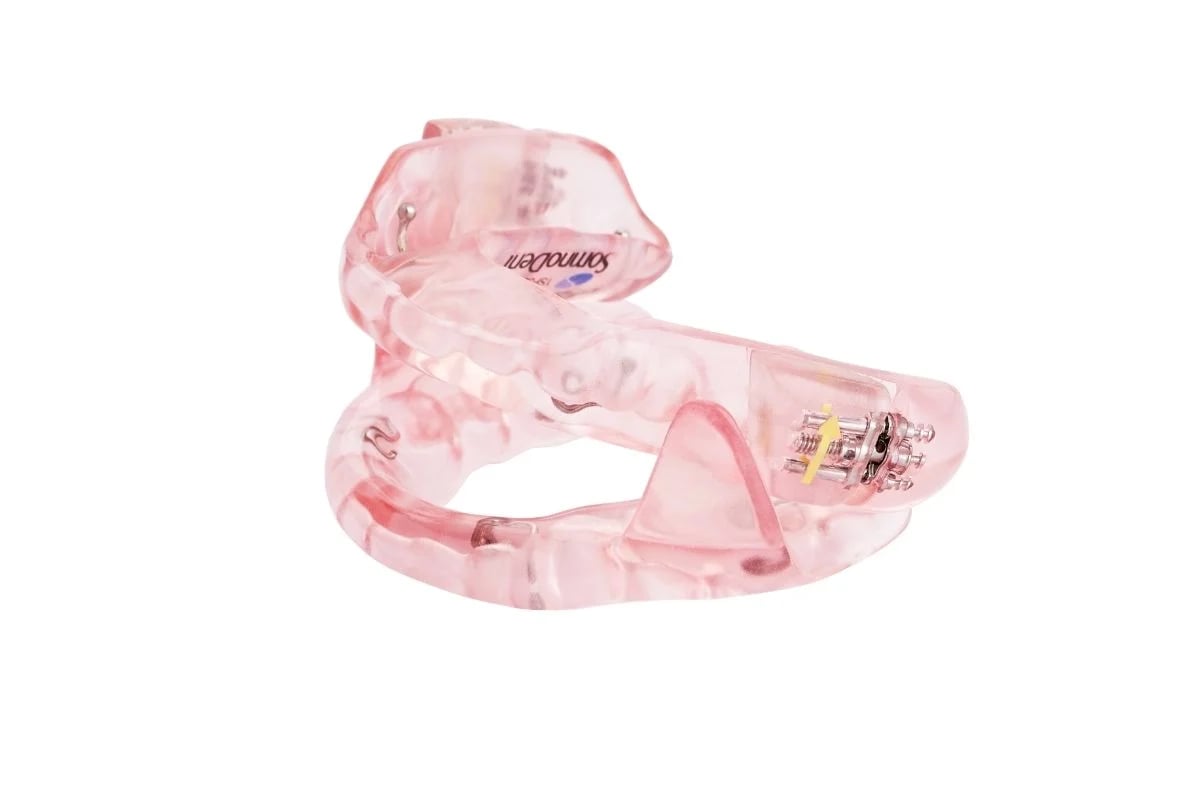
SomnoDent is a brand of mandibular advancement device: a custom-made splint, worn overnight, that holds the lower jaw slightly forward to stop the airway collapsing. It is made by SomnoMed, an Australian manufacturer, and several devices in the SomnoDent product family have received FDA clearance in the United States. Its position in Singapore is more complicated, and worth understanding before you commit to one.

What Is SomnoDent?

SomnoDent is a family of oral appliances. Each one is manufactured to a digital scan of your own bite, so it is built for your mouth alone, and the jaw position is advanced in controlled increments after it is fitted.

The manufacturer holds 13 clearances from the United States Food and Drug Administration under Somnomed Inc, running from the original SomnoMed MAS RxA in July 2005 through to Virtus in June 2026.

somnodent splint mouthguard
SomnoMed model FDA clearance Cleared
SomnoMed MAS RxA K050592 July 2005
SomnoDent G2 K121340 May 2012
SomnoDent Herbst, Classic, Flex K130558 May 2013
SomnoDent Fusion, Classic and Flex K140278 June 2014
SomnoDent ALPHA K162306 September 2016
SomnoDent Avant K183443; May 2019;
Virtus K261366 June 2026

Is SomnoDent Registered for Use in Singapore?

Not under that name. A search of the Singapore Medical Device Register maintained by the Health Sciences Authority did not identify a registration under the SomnoDent or SomnoMed name. The similarly-named entries on the register belong to SOMNOmedics, an unrelated German company that makes sleep recording equipment.


That absence does not by itself establish how the appliance is regulated in Singapore, and it is worth understanding why. HSA exempts custom-made devices from registration where four conditions are all met: the device is made at the request of a qualified practitioner, made to that practitioner's specification, intended for one individual only, and not adapted from a mass-produced device.


Whether an appliance falls within that exemption depends on whether it meets HSA's criteria for a custom-made device. HSA also draws a separate category for patient-matched devices adapted from a manufacturer's standard design, and those do generally require registration, so which side of the line a given appliance falls is a question for the supplier. Either way, any company importing or supplying devices here still needs a dealer's licence and must notify HSA of custom-made devices before supply.


What this means in practice is simple. The register will not settle the question for you the way it does for an implant, so ask your dentist directly who manufactures the appliance, where it is made, and under what arrangement it is supplied.


How Well Mandibular Advancement Devices Work

This is where the honest answer matters more than the marketing. A 2020 systematic review and meta-analysis in Sleep Medicine pooled 14 randomised controlled trials comparing CPAP against mandibular advancement devices, covering 249 patients on CPAP and 247 on an oral appliance.


CPAP reduced the apnoea-hypopnoea index significantly more than the oral appliance did, by a weighted mean difference of 7.08 events per hour, with a 95% confidence interval of 5.10 to 9.06. On this primary measure, CPAP produced a greater reduction in apnoea events. But there was no significant difference between the two groups in daytime sleepiness as measured by the Epworth Sleepiness Scale, and the oral appliance group scored higher on the social function component of quality of life.


The practical reading is that CPAP produced a greater reduction in apnoea events, while oral appliances may still be considered for suitable patients who have difficulty tolerating CPAP. Treatment adherence is one of the factors considered when discussing the available options. That trade-off, not a claim of equivalence, is the real case for an appliance.

Who an Oral Appliance Suits

Mandibular advancement devices are generally considered for snoring and for mild to moderate obstructive sleep apnoea, and for people with more severe disease who cannot tolerate CPAP. They work by mechanically holding the lower jaw forward, so they address the obstruction in obstructive sleep apnoea and do nothing for central sleep apnoea, where the breathing signal from the brain falters and the airway itself is clear.

Because the splint anchors on your teeth, you need enough sound teeth to hold it, and existing jaw joint problems or untreated gum disease need addressing first. Whether you are a candidate is decided from a sleep study and a dental assessment together, not from a website. Our sleep apnea page covers how the condition is diagnosed and what the treatment options are.

How We Use SomnoDent

Nuffield Dental fits SomnoDent appliances, manufactured to a digital scan of your bite and advanced in controlled increments. Our sleep dentistry service also covers referral for CPAP where that is the more appropriate route. Which route suits you depends on the severity shown by your sleep study, the state of your teeth and jaw joints, and your ability to tolerate and use the prescribed treatment consistently.


How well an appliance works depends in part on its fit. It is built from your scan, advanced in stages as you adapt to the jaw position, and reviewed to confirm it is controlling the apnoea, which is a separate question from whether the snoring stopped. If you are considering one, a consultation is where your sleep study results and your dental condition get looked at together.

Cost Of Root Canal Treatment In Singapore

implants

Cost Of Root Canal Treatment In Singapore

Root Canal Treatment Cost

The price varies according to the unique treatment prescribed to each individual patient. For example, if a root canal treatment is require for more than one root, the cost would go up as well. However, saving the tooth with a Root Canal treatment is relatively cost-efficient in the long run. 


A Root Canal Treatment procedure in Singapore's price ranges from S$500 - S$1700. However, the price may or may not include the crowning of the tooth and consultation charges. Average consultation prices of dental services in Singapore ranges from S$75- S$200. 

Root Canal Treatment FAQs

Is a Root Canal Treatment procedure painful?


  • The entire procedure will be done under local anaesthesia, so it will not be painful than getting your tooth filled or a wisdom tooth surgery. However, the affected area may cause discomfort and be slightly sore post-surgery but it goes away after a few days. 
  • If the pain persists, please consult our doctor immediately. You can reach us at +65 9839 7363.

    Can I go about my day to day activities after a Root Canal Treatment? 

  • Most patients are able to return to school or work the next day following a Root Canal Treatment. However, it is advised against eating immediately post-surgery as there may be numbness in the affected area. 


What are the side effects of a Root Canal Treatment?

  • The side effects of a Root Canal Treatment differs with each individual. Some people may experience pain or a slight soreness post-surgery, and some people may experience little to no pain at all. This also applies to certain patients experiencing a measured amount of sensitivity associated to cold or heat when consuming food or beverages. 

What is the aftercare for a Root Canal Treatment? 


  • As a Root Canal Treatment is considered a restorative procedure, the after-care is deemed crucial to experience lasting effects. After your procedure, your dentist will send you home with pain-killers to counter the soreness you may feel when the anaesthesia wears off. It is also strongly advised against the consumption of food until the numbness wears off. Brushing and flossing daily is encouraged to keep the area clean and this in turn would prevent infection. Upon completing any follow-up appointments for the Root Canal Treatment, you may be required to return to the dentist for a final crown to fully restore the tooth. A properly treated and restored tooth can last as long as your natural teeth. 

Can a Root Canal Treatment be unsuccessful? 


  • A Root Canal Treatment has a 90% success rate of fully restoring your tooth. However. failure to fully restore your tooth can occur if there is a loose crown, tooth fracture or decay. Undetected canal branches or an obstruction that causes the cleaning difficulties may also cause a Root Canal Procedure to fail. Should your Root Canal Treatment be unsuccessful, explore options with Nuffield's Endodontist for possible solutions. 


Orchard Dental

Nuffield Dental Jewel
Wheelock Place501 Orchard Road #05-01 Singapore 238880

The Nuffield Dental Clinic Network In Singapore

Nuffield Dental Seletar

Nuffield Dental Seletar
Greenwich V
1 Seletar Road #01-07/08
Singapore 807011

Nuffield Dental Kovan

Nuffield Dental Kovan
Simon Plaza
2 Kovan Road #01-03
Singapore 548008

Nuffield Dental Serangoon Gardens

Nuffield Dental Serangoon Gardens
Serangoon Garden Estate
57 Serangoon Garden Way
Singapore 555953

Nuffield Dental Siglap

Nuffield Dental Siglap
The Domain
914 East Coast Road #01-03
Singapore 459108

Nuffield Dental Bedok

Nuffield Dental Bedok
East Village Mall
430 Upper Changi Road #01-64
Singapore 487048

Nuffield Dental Holland Village

Nuffield Dental Holland Village
7 Holland Village Way #03-16
Singapore 275748

Nuffield Dental Jurong East

Nuffield Dental Westgate
Westgate
3 Gateway Dr #04-32
Singapore 608532

Nuffield Dental Marina One

Nuffield Dental Marina One
The Heart, Marina One
5 Straits View #B2-58
Singapore 018935

Nuffield Dental Jewel

Nuffield Dental Jewel
Wheelock Place
501 Orchard Road #05-01
Singapore 238880

Nuffield Dental Raffles Place

Nuffield Dental Raffles Place
One Raffles Place
1 Raffles Place #05-19
Singapore 048616

FAQs

It is not listed on the Singapore Medical Device Register under the SomnoDent or SomnoMed name, which is a different position from a registered device such as a dental implant. Custom-made appliances are handled under a separate part of the framework, so the practical step is to ask your dentist which appliance they use and how it is supplied.

No, not on the primary measure. The pooled trial evidence shows CPAP reduces apnoea events significantly more. For daytime sleepiness, the pooled trials found no significant difference between CPAP and oral appliances. Tolerability and adherence can also be considered when discussing treatment options. Whichever treatment is prescribed still needs to be used consistently and reviewed to confirm that it is controlling the condition.

No. It manages the obstruction while you are wearing it. Stop wearing it and the airway behaves as it did before, which is why oral appliance treatment is ongoing for as long as you need it.

Any appliance that applies force to the teeth overnight can produce bite changes over years of use, which is why oral appliance treatment includes periodic dental review for as long as you wear it. Raise it at your assessment so it is monitored from the start.

You should not. An oral appliance treats obstructive sleep apnoea, and a sleep study is used to determine whether breathing disturbances are due to obstructive sleep apnoea, central sleep apnoea or whether snoring occurs without apnoea. Fitting a splint without knowing which one you have risks leaving a serious condition untreated..

Medical References

Health Sciences Authority. (n.d.). Import, manufacture or supply of personalised medical devices (including custom-made). Health Sciences Authority. https://www.hsa.gov.sg/medical-devices/manufacturing-import-and-supply/custom-made-devices/

Health Sciences Authority. (n.d.). Singapore Medical Device Register (SMDR). Health Sciences Authority. https://www.hsa.gov.sg/e-services/infosearch

Li, P., Ning, X.-H., Lin, H., Zhang, N., Gao, Y.-F., & Ping, F. (2020). Continuous positive airway pressure versus mandibular advancement device in the treatment of obstructive sleep apnea: A systematic review and meta-analysis. Sleep Medicine, 72, 5-11. https://doi.org/10.1016/j.sleep.2020.03.015

medical-appointment 1

Book an Appointment

Fill out the form for any request or questions you have and we will contact you within one working day..

featured-logos-1
background image

Why Choose Nuffield Dental?

Nuffield Dental is a dental clinic in Singapore providing services across several dental disciplines. Treatment is planned after a consultation and clinical assessment.

Dental care

Nuffield Dental provides dental services across several disciplines at its clinics in Singapore. After a consultation and clinical assessment, your dentist sets out the treatment options that apply to your case, what each option involves and what it costs, before treatment begins.

Root Canal Treatment

Our dentists are registered with the Singapore Dental Council. The team includes dentists who provide root canal treatment, oral surgery and dental implant treatment. Each dentist's qualifications and registration details are listed on their profile page.

Articles

The newest and best lifestyle articles selected by our editorial team.

  • 20 Jul 2026
  • 2 mins read
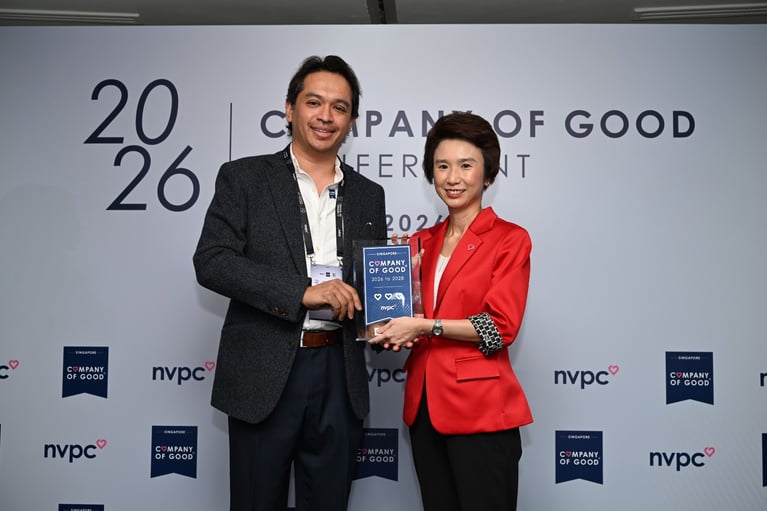
Nuffield Holdings Private Limited Recognised as a Singapore Company of Good

Nuffield Holdings Private Limited is pleased to announce that it has been conferred the Singapore Company of Good 3 Hearts Recognition by the...

Receding Gums in Singapore Causes, Treatment & Cost

What are receding gums? Receding gums happens when the gums draw back from the teeth, hence exposing the roots underneath. The condition is common -...

Mercury-Based Dental Fillings: Global Shifts and Nuffield Dental’s Clinical Approach

Why the Global Phase-Down Is Happening Mercury is listed by the WHO as one of the top ten chemicals of public health concern. In dentistry, the...